
facebook
  • ChukkiMane
  • No Comments
Banyan tree standing strong over ages

India’s Living Giant and Guardian of Ecosystems

The Great Banyan Tree at ChukkiMane

India’s Living Giant and Guardian of Ecosystems

ChukkiMane, Karnataka
Across villages, temples, and landscapes in India stands one of nature’s most extraordinary trees — the Banyan tree (Ficus benghalensis). With its massive canopy, hanging aerial roots, and centuries-long lifespan, the banyan tree has become a symbol of endurance, knowledge, and ecological balance.
In many parts of Asia, banyan trees have served as gathering places for communities, shade for travelers, and habitats for countless birds and animals. But beyond its cultural symbolism, the banyan tree plays a powerful ecological role. It supports biodiversity, improves soil health, and provides shelter and food for many species. Understanding the banyan tree helps us appreciate how one living organism can influence entire ecosystems.

What Is the Banyan Tree?

The Banyan tree (Ficus benghalensis) is one of the largest and longest-living trees in the world. It belongs to the fig family and is native to the Indian subcontinent.

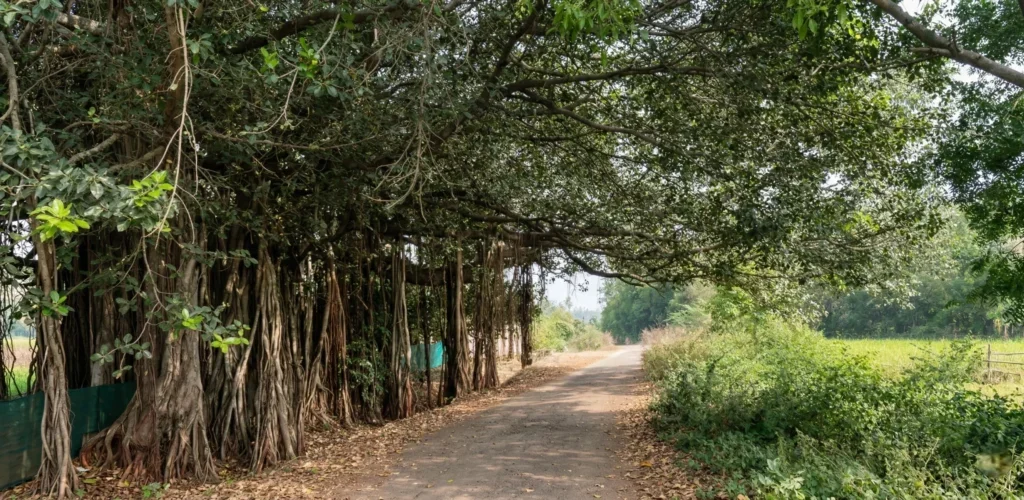
A unique feature of the banyan tree is its aerial roots, which grow downward from branches and eventually reach the soil. Over time, these roots become additional trunks that support the expanding canopy.

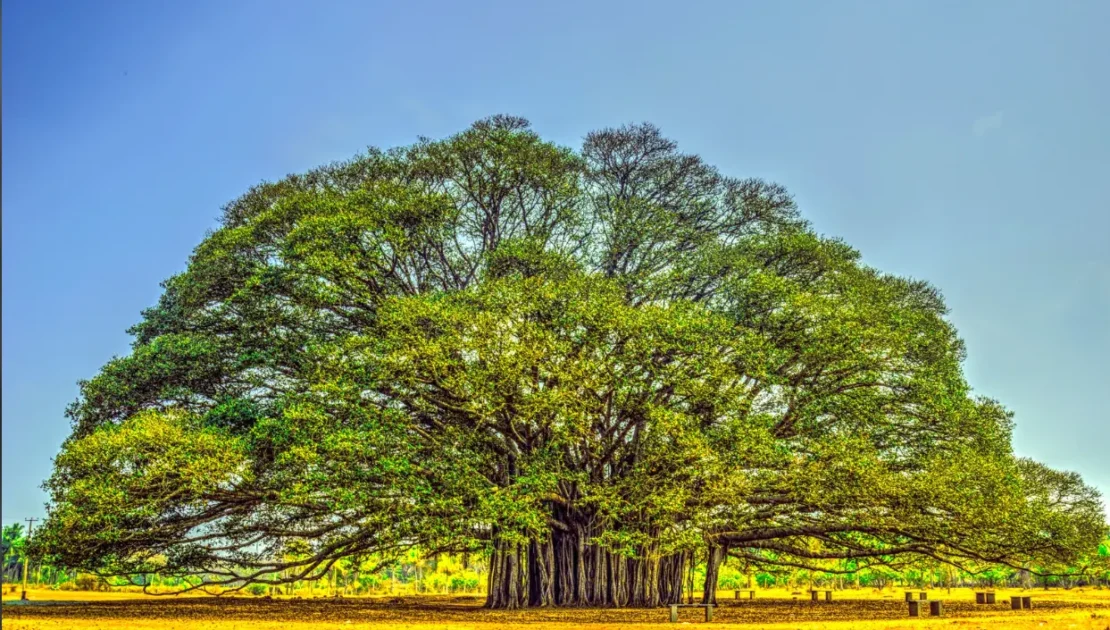
Because of this growth pattern, a single banyan tree can spread across a very large area, sometimes covering several acres.

For centuries, banyan trees have been planted near temples, village centers, and water bodies, where they provide shade and become natural gathering spaces.
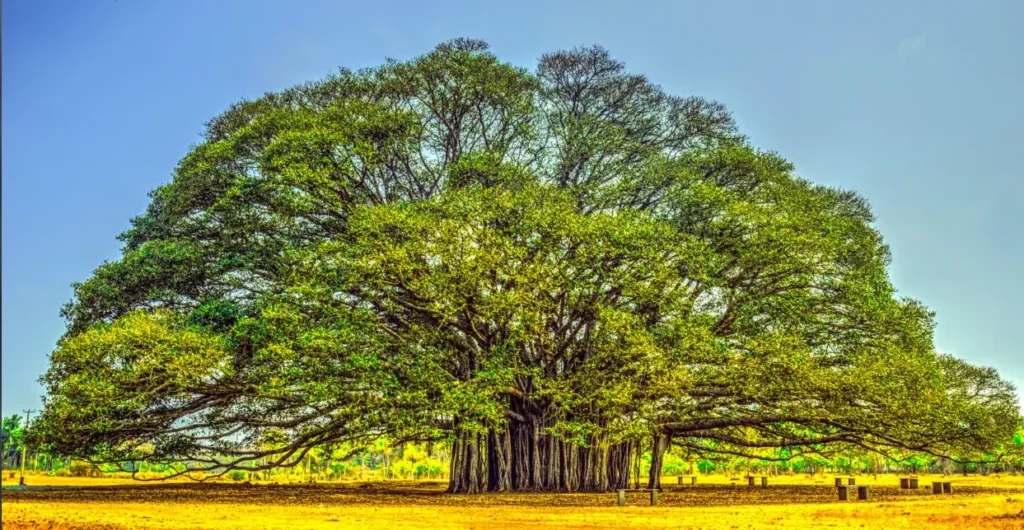
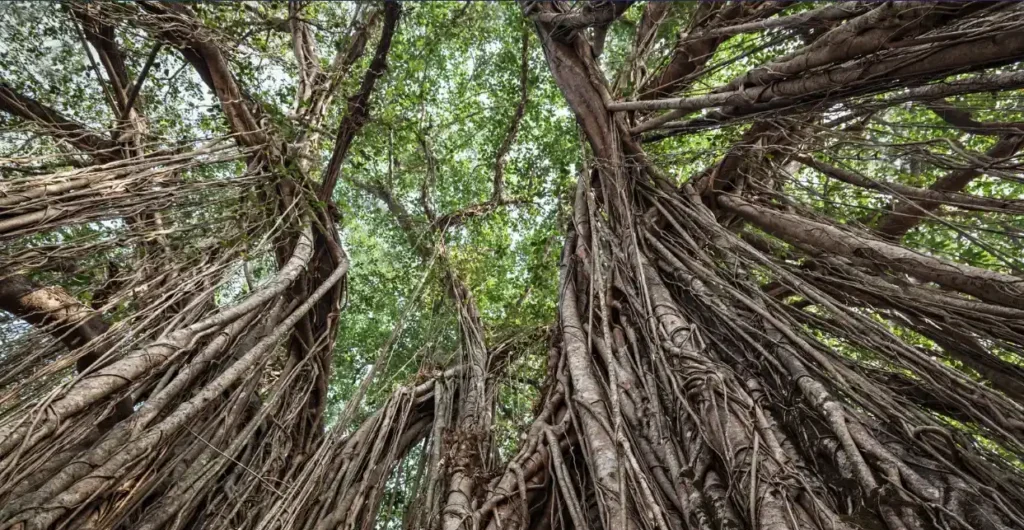
Banyan tree standing strong over ages

How Long Can a Banyan Tree Live?

Banyan trees are known for their incredible longevity. Many banyan trees in India and Asia have lived for hundreds of years, and some are believed to be over 500–700 years old.

Because banyan trees continuously produce new roots and trunks, they can survive for extremely long periods compared to many other tree species.

Famous banyan trees in India demonstrate this remarkable lifespan:

The Great Banyan Tree in Kolkata — over 250 years old
Thimmamma Marrimanu in Andhra Pradesh — one of the largest banyan trees in the world
Dodda Alada Mara in Karnataka — a famous banyan tree covering several acres

These ancient trees remind us how long-lived ecosystems can be when nature is allowed to thrive.

Roots of the Banyan tree spreading

Why Banyan Trees Are Essential to Nature

Habitat for Wildlife

Banyan trees support an incredible variety of life. Birds, monkeys, insects, and small animals rely on the tree for shelter and food. The figs produced by banyan trees provide an important food source that helps sustain wildlife populations.

Natural Climate Regulator

With their massive canopies and dense leaves, banyan trees provide cooling shade and help regulate local temperatures. They absorb carbon dioxide and release oxygen, improving air quality and creating healthier environments.

Soil Protection & Ecosystem Stability

The extensive root systems of banyan trees stabilize soil and prevent erosion. Their fallen leaves enrich the soil with organic matter, improving fertility and supporting the growth of surrounding plants.

Genetic Wisdom and the Banyan Tree

Like all living organisms, the banyan tree carries an enormous amount of biological information within its DNA. This genetic code contains instructions that allow the tree to grow, adapt to changing environments, and survive for centuries.

Scientists often study long-living trees like banyans to understand how plants adapt and survive over long periods of time. These trees represent a living archive of ecological adaptation and natural evolution.

“Over generations, banyan trees have developed resilience to local climate conditions, pests, and seasonal changes”
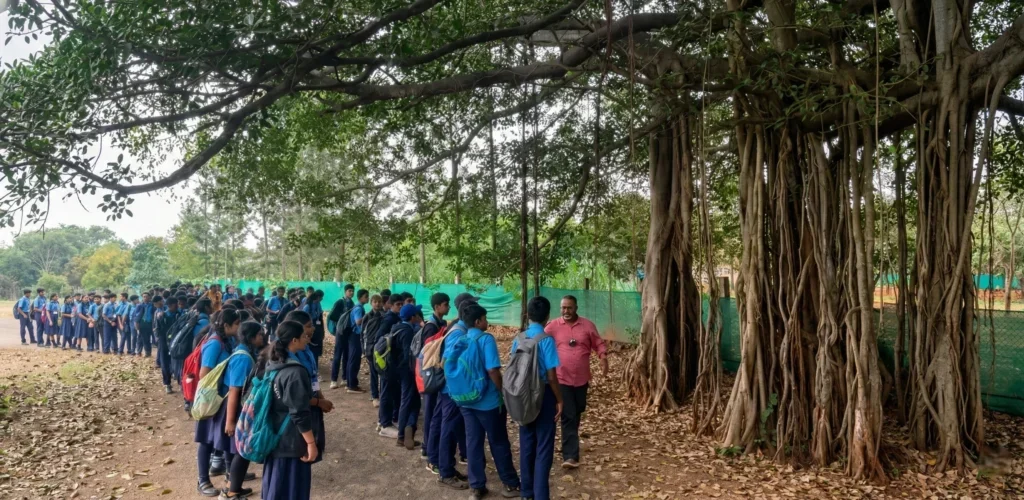
Person explianing the importance of Banyan tree to Children

The Banyan Tree in Culture and Sustainability

Beyond ecology, the banyan tree holds deep cultural and spiritual significance in India and many parts of Asia. Traditionally, village meetings, spiritual gatherings, and social interactions often took place under the shade of banyan trees.
Because of their long life and protective canopy, banyan trees symbolize:
• longevity
• wisdom
• stability
• connection between humans and nature
Today, conserving banyan trees is important not only for cultural heritage but also for protecting biodiversity and ecological balance.
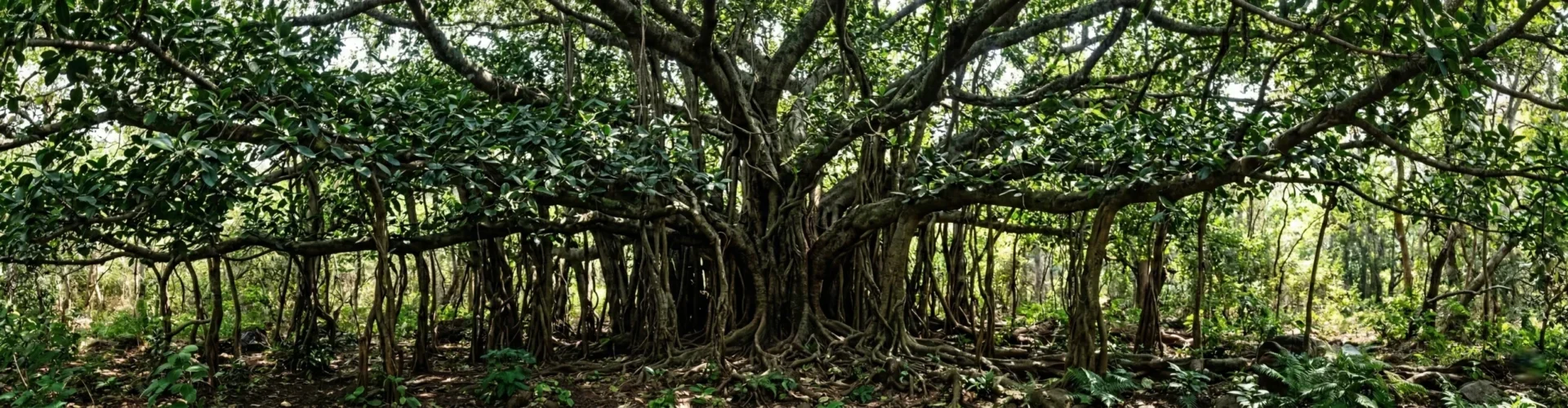
Age old Banyan tree at ChukkiMane

Banyan grows ecosystems over centuries

Protecting such trees means protecting the natural systems that sustain life around us.

The Tree That Sustains Life

From birds and animals to soil and climate, the banyan tree supports entire ecosystems. Its massive canopy and roots create a thriving habitat that connects land, life, and nature in remarkable ways.

Frequently Asked Questions

How long can a banyan tree live?

Banyan trees can live for several hundred years, with some trees believed to be over 500 years old.

Why are banyan trees important to ecosystems?

They provide habitat for wildlife, improve soil health, regulate local climate, and support biodiversity.

What makes the banyan tree unique?

Its aerial roots grow into new trunks, allowing the tree to expand and cover large areas.

Where are banyan trees commonly found?

They are native to the Indian subcontinent and widely found across South and Southeast Asia.

Why is the banyan tree culturally important in India?

It symbolizes longevity, wisdom, and community gatherings in many traditional cultures.