1. What is the main difference between Saaru and Sambar?
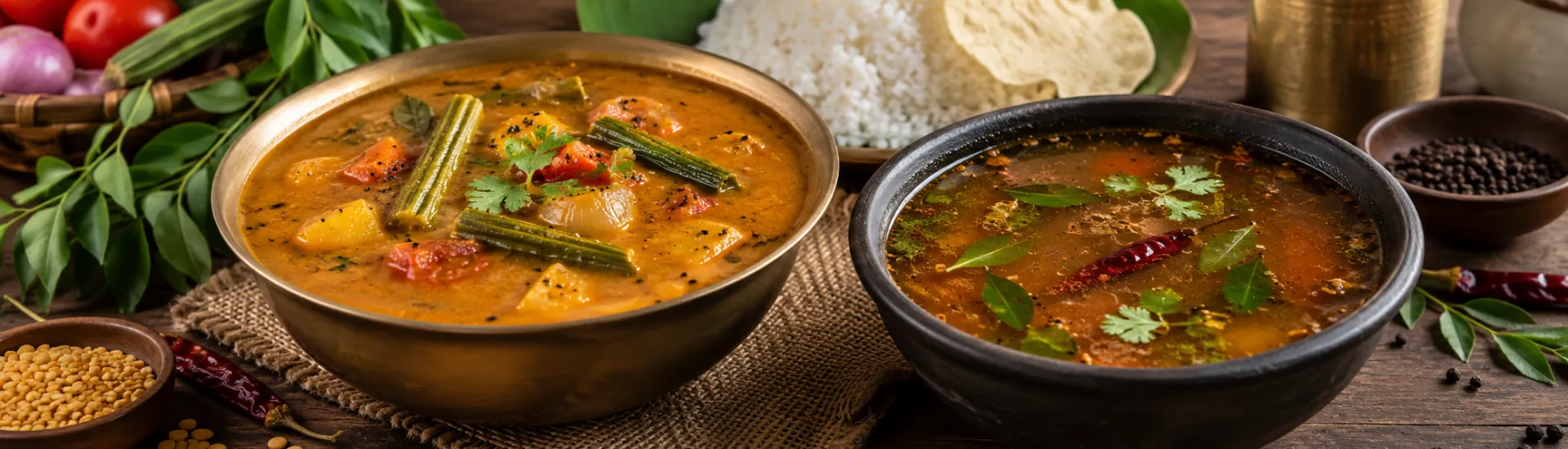
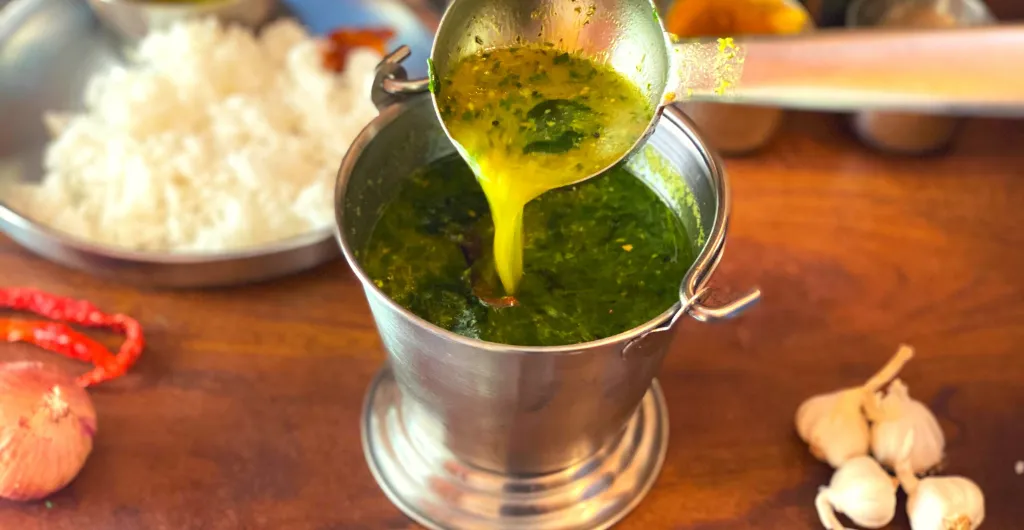
Saaru is generally thinner, lighter and more aromatic, while Sambar is thicker and usually contains more dal and vegetables.
2. Is Saaru the same as Rasam?
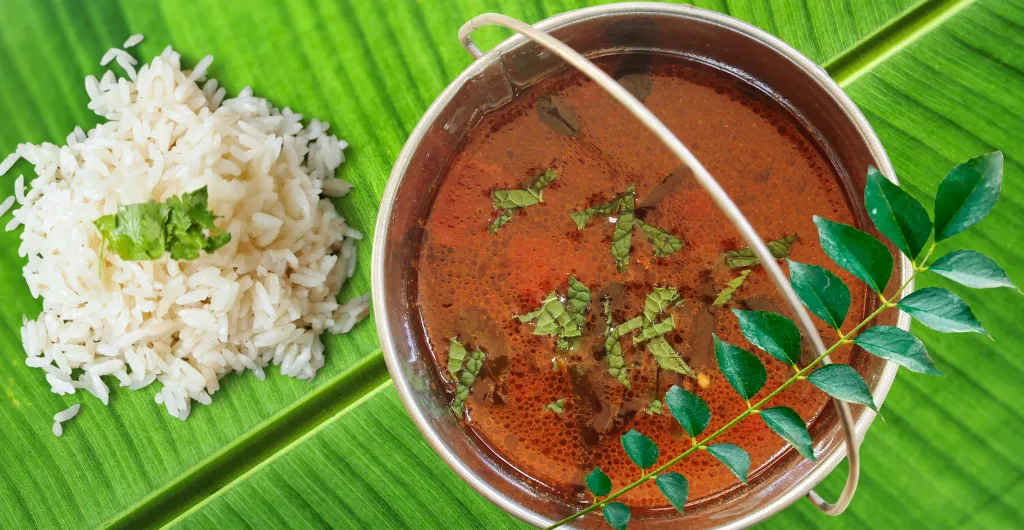
In Karnataka, Saaru is commonly used for rasam, although different types of Saaru can vary in ingredients and preparation.
3. Is Sambar thicker than Saaru?
Generally, yes. Sambar usually has a thicker, more substantial consistency because cooked dal and vegetables form a larger part of the preparation. Saaru is typically more broth-like.
4. Which has more vegetables — Saaru or Sambar?
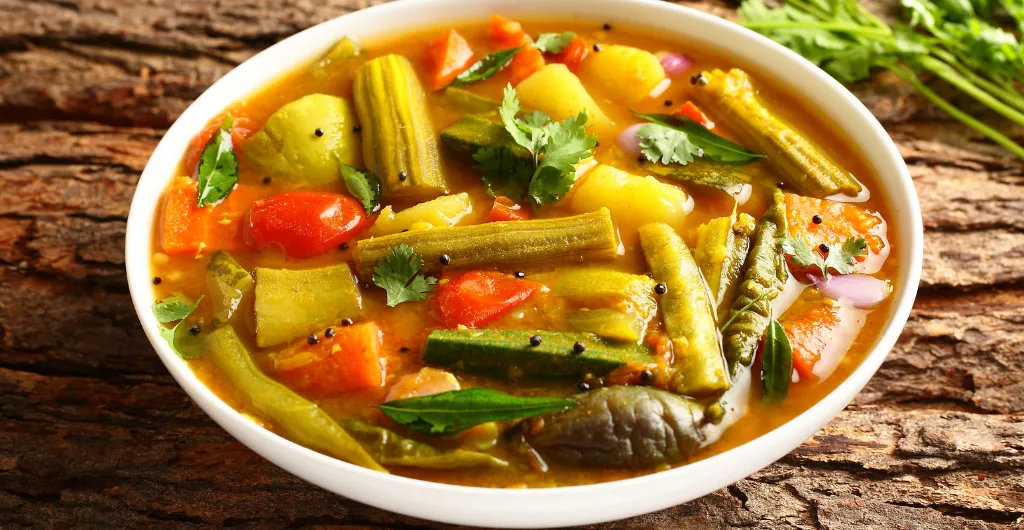
Sambar generally contains a larger variety and quantity of vegetables, while many Saaru preparations focus more on a thin spiced broth with ingredients such as tomato or a particular vegetable or bean.
5. Does Saaru contain dal?
It can. Some Saaru varieties use a small amount of cooked dal or dal water for body, while other preparations may contain little or no dal. Recipes vary considerably by region and household.
6. Which is better with rice — Saaru or Sambar?
Both are excellent with rice, but they offer different experiences. Sambar makes a hearty, substantial combination, while Saaru creates a lighter, tangier and more aromatic rice preparation.
7. Can Saaru and Sambar be served in the same meal?
Absolutely. In many traditional South Indian meal patterns, they complement each other rather than replace one another, moving the meal from a richer preparation towards a lighter one.
8. Why does Karnataka Saaru taste different from rasam elsewhere?
Regional recipes differ in their balance of spices, souring ingredients and other additions. Karnataka’s Saaru has its own regional character, and individual families often have their own version as well.