

facebook
  • ChukkiMane
  • No Comments
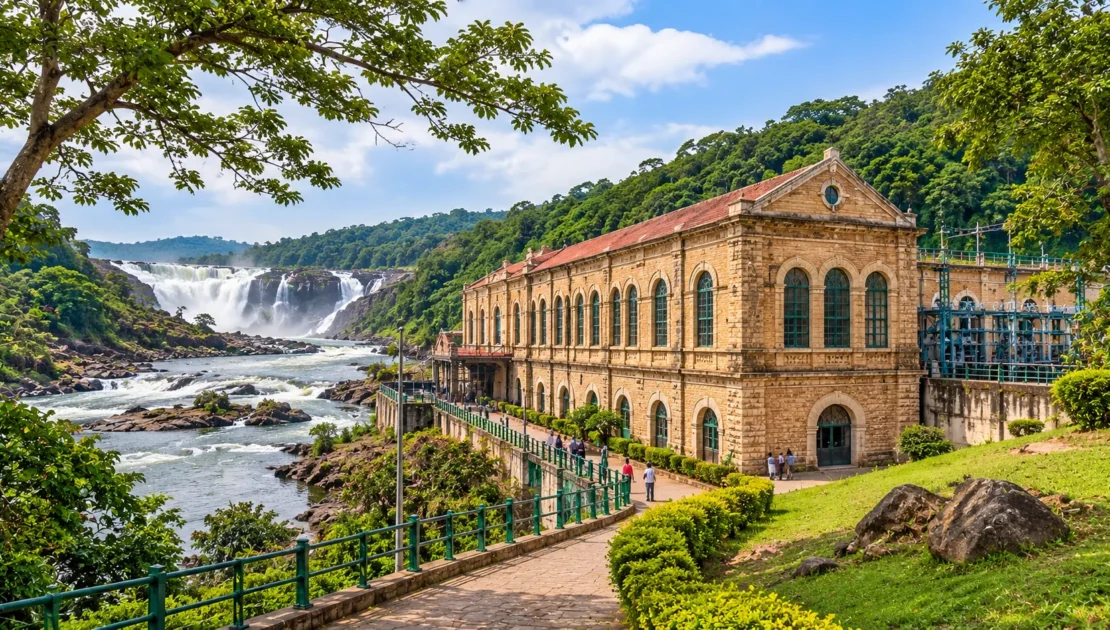
Historic Shivanasamudra hydroelectric power station beside the Kaveri River

The river that once powered a new era

A Kaveri heritage story

The river that once powered a new era.

Before Bengaluru was a city of lights, the waterfalls of Shivanasamudra were already making history.

Discover the power story
The beginning

More than a waterfall.
A turning point.

What if the waterfalls you admire today once helped power gold mines, illuminate city streets and change the course of Karnataka’s history?

Long before electricity became part of everyday life, the mighty Kaveri River was already making history at Shivanasamudra. During the reign of Maharaja Nalvadi Krishnaraja Wadiyar IV, an ambitious vision took shape: transform the force of flowing water into electricity.

On 30 June 1902, the Shivanasamudra hydroelectric power station began supplying electricity — opening a remarkable chapter in Asia’s commercial hydroelectric story.

01 / The first spark

When a waterfall met extraordinary engineering.

The vision of Dewan Sir K. Seshadri Iyer and the engineering efforts of Major A. J. de Lotbinière helped turn a bold idea into reality. The same river that draws visitors with its spectacular cascades once carried the power that fuelled industrial progress.

Follow the timeline →

02 / The long line

How did a waterfall help power the Kolar Gold Fields?

The answer travelled over a hundred kilometres of difficult terrain.

Mining operations at KGF needed enormous amounts of electricity. Machinery, imported equipment and even wooden transmission poles had to make the journey by elephant, horse and bullock cart. The project initially generated around 700 kW — enough to transform underground work and, soon after, help light Bengaluru’s streets.

700kW initial capacity
1905Bengaluru street lighting

03 / Two rivers, one legacy

A living lesson in
renewable power.

Shivanasamudra and Shimsha are distinct hydroelectric developments — connected by a river system, but each with its own story.

1902

Shivanasamudra

The historic station begins generating power on the Kaveri, supplying KGF and later Bengaluru.

1938–39

Shimsha

A separate development on the Shimsha River adds another milestone to Karnataka’s hydroelectric network.

120+

Years of impact

Together, these pioneering projects tell a story of water, ingenuity and a commitment to renewable energy.

04 / The place today

Come for the water.
Stay for the story.

The Kaveri divides into two spectacular cascades — Gaganachukki and Bharachukki. One plunges dramatically through rocky gorges; the other spreads in a broad, powerful flow.

After the monsoon, the river moves with renewed energy. For photographers, nature lovers and curious travellers, this is more than sightseeing. It is a chance to witness the force that inspired a revolution.

05 / Slow travel

Make room for
the good kind of quiet.

Why rush home after discovering a place like this?

Make your trip a relaxing getaway at ChukkiMane, where nature, traditional hospitality and peaceful surroundings come together. Enjoy the outdoors, traditional Karnataka food and time with family and friends.

FAQs – Everything You Should Know About Shivanasamudra and Shimsha

1. Why is Shivanasamudra famous in Karnataka’s history?
Shivanasamudra is famous for its twin waterfalls and its historic hydroelectric power station, which began supplying electricity in 1902. It played an important role in powering the Kolar Gold Fields and supporting Bengaluru’s early electrification.

2. Was Shivanasamudra home to Asia’s first hydroelectric power station?
The Shivanasamudra project is widely recognised as one of Asia’s earliest major commercial hydroelectric power stations. It began operations in 1902. India’s earlier Sidrapong hydroelectric installation in Darjeeling dates to 1896, so the distinction should not be confused with India’s first hydroelectric installation.

3. Who was responsible for establishing the Shivanasamudra hydroelectric project?
The project was developed under the Mysore Kingdom during Maharaja Nalvadi Krishnaraja Wadiyar IV’s reign, with the support of Dewan Sir K. Seshadri Iyer and the engineering contributions of Major A. J. de Lotbinière.

4. How was electricity transmitted from Shivanasamudra to Kolar Gold Fields?
Electricity was transmitted over long-distance power lines to the Kolar Gold Fields, helping operate mining machinery and supporting industrial activities.

5. What is the difference between Shivanasamudra and Shimsha hydroelectric power stations?
Shivanasamudra is associated with the Kaveri River and began generating electricity in 1902. The separate Shimsha hydroelectric project is located on the Shimsha River, a tributary of the Kaveri, and was developed later.

6. What are Gaganachukki and Bharachukki waterfalls famous for?
They are the two spectacular waterfalls formed by the Kaveri River at Shivanasamudra. Gaganachukki is known for its dramatic waterfall views, while Bharachukki is admired for its broad cascading flow.

7. When is the best time to visit Shivanasamudra waterfalls?
The monsoon and post-monsoon months generally offer the most spectacular waterfall views, when the Kaveri carries abundant water. Visitors should follow local safety instructions and avoid entering restricted water areas.

8. Can Shivanasamudra be included in a weekend trip from Bengaluru?
Yes. Shivanasamudra is a popular weekend destination from Bengaluru. Visitors can combine waterfall sightseeing, nature exploration and a relaxing stay around the region.

9. Why should you plan a stay at ChukkiMane while exploring this region?
ChukkiMane offers an opportunity to enjoy a nature-focused getaway, traditional Karnataka hospitality, food and outdoor experiences while exploring the surrounding attractions.