


facebook
  • ChukkiMane
  • No Comments
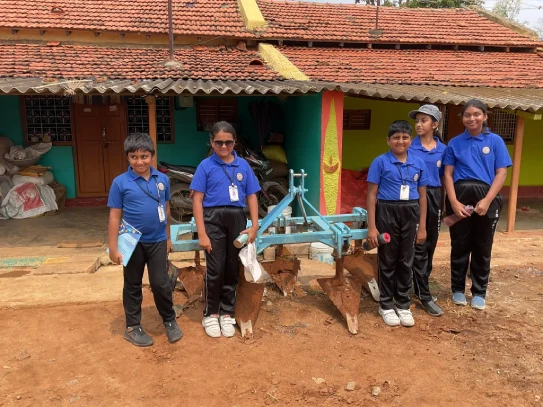
School children learning about traditional farming equipment

How to Plan an Educational Farm Visit for School Students in Karnataka

ChukkiMane school experiences

What If the Best Classroom Had
No Walls?

Imagine children planting their first seed, discovering how food grows, spotting birds in their natural habitat and experiencing the simple joys of village life. An educational farm visit transforms everyday lessons into unforgettable memories. Discover how to plan a meaningful school field trip in Karnataka where curiosity grows, learning becomes hands-on, and nature becomes the teacher.

School children learning about traditional farming equipment.

Curiosity grows when learning steps outside the classroom.

✽

SBring students closer to agriculture, nature and the roots of Karnataka.

01

Why Every Student Deserves a Classroom Without Walls

When was the last time a child learned something simply by getting their hands dirty?

A lesson about soil becomes more interesting when students actually touch it. A chapter about agriculture becomes unforgettable when they watch a farmer sow seeds. And a discussion about biodiversity becomes meaningful when they hear birds calling from the trees around them.

This is the magic of an educational farm visit. Unlike conventional school excursions that focus mainly on sightseeing, a farm visit allows students to experience the world around them. They begin to understand where their food comes from, how farmers work, why trees and water matter, and how every living thing plays a role in maintaining nature's balance.

The National Education Policy (NEP) 2020 encourages experiential and hands-on learning, making nature-based educational visits a meaningful way to complement classroom education. Karnataka's 2026 Gramanubhava initiative also reflects a growing emphasis on giving students first-hand exposure to agriculture and rural life.

A well-planned educational farm trip in Karnataka can therefore become much more than a day away from school. It can become a lesson in science, geography, environmental studies, culture and life skills — all happening naturally in one place.

Discover School & College Experiences at ChukkiMane
Children enjoying a traditional Diwali celebration with sparklers and festive lights.
02

Before You Pack the Bags, Give the Visit a Purpose

The hidden cost of Firecrackers

An educational farm visit becomes truly valuable when children know what they are going to discover. Rather than planning an outing around activities alone, begin with a simple question: What should students take home from this experience?

For younger children, the excitement might come from planting seeds, observing butterflies, identifying birds or meeting farm animals. For older students, the same visit can introduce them to organic farming, soil conservation, irrigation, biodiversity, traditional agriculture and sustainable rural livelihoods.

The trick is to connect the experience with what they already learn in school. A science lesson about plant growth can become a seed-sowing activity. A geography chapter about natural resources can become an exploration of soil and water. A social studies lesson about villages can turn into conversations with farmers and local communities.

When the activities are planned around the students' age, interests and learning objectives, even the simplest farm experience can create lasting curiosity.

A good starting point is to decide the learning objectives, select suitable activities, estimate the visit duration and prepare a simple observation task for students. Teachers can also encourage children to maintain a small field diary, sketch what they see or write down three new things they discover.

Explore the Farmers Meet & Crop Learning Trail
03

What Can Students Actually Learn on an Educational Farm Visit?

A farm is not just a place where crops grow. It is a living laboratory where science, nature, culture and everyday life come together. Here are three exciting learning experiences that can turn an ordinary school trip into an unforgettable educational journey.

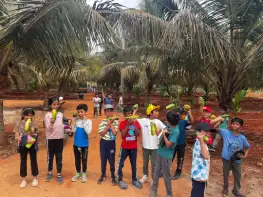
Children discovering fresh farm vegetables during an educational outing.
01

Agriculture & Food Education

Plant seeds and understand germination. Discover soil health and composting. Learn how crops grow through seasons. Understand the journey from farm to plate.

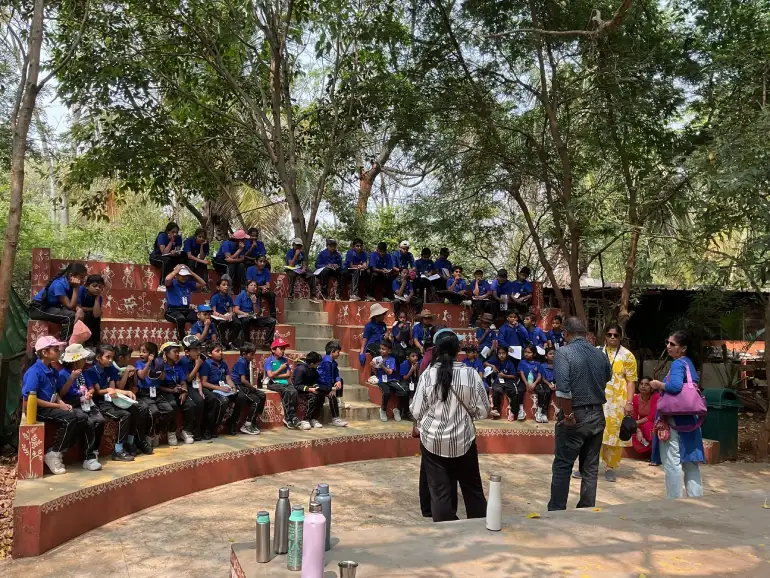
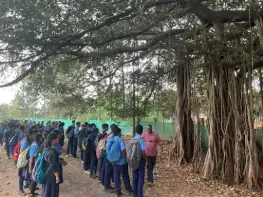
School students exploring a giant banyan tree during a nature walk.
02

Nature & Environmental Learning

Identify birds, butterflies and trees. Explore biodiversity and ecosystems. Understand water and soil conservation. Discover the importance of wildlife habitats.

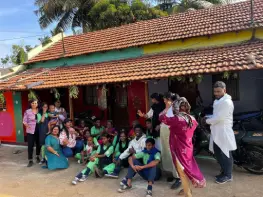
Students experiencing rural life during a school farm visit.
03

Rural Life & Cultural Learning

Interact with farmers and villagers. Discover indigenous cattle breeds. Experience traditional farming methods. Explore village games and rural traditions.

Each experience gives students a different perspective on the world they live in. They begin to see that food, farming, wildlife and communities are interconnected. More importantly, they learn to appreciate the people and natural resources that make everyday life possible.

At ChukkiMane, these experiences can come alive through farmer interactions, crop learning trails, native cow farm visits, birdwatching and village exploration, with activities depending on availability and the season.

Explore All Activities at ChukkiMane

04

How to Choose the Right Educational Farm Destination in Karnataka

Not every farm visit offers the same learning experience. The right destination should give students opportunities to observe, interact, ask questions and participate in age-appropriate activities rather than simply walk around and look at things.

Look for places that offer genuine agricultural exposure, knowledgeable guides or farmer interactions, accessible learning spaces and activities suited to the students’ age groups. A combination of farming, animal care, nature exploration and rural experiences can make the visit more engaging than focusing on a single activity.

Safety should always be at the centre of the planning process. Before confirming a destination, schools should understand the facilities available, walking routes, supervision arrangements, first-aid provisions, drinking water and sanitation facilities. Teachers should maintain appropriate student-to-adult supervision, collect parental consent, share emergency contact details and brief children about expected behaviour.

It is equally important to prepare students for the outdoors. Comfortable clothing, suitable footwear, drinking water, sun protection and a small notebook can make the experience easier and more enjoyable. Schools should also coordinate with the destination in advance to understand seasonal conditions and any activity-specific precautions.

Karnataka has emphasised safer educational excursions and supervised student visits through school-tour guidance, so institutions should check the latest applicable departmental instructions and approval requirements before travelling.
Plan Your School or College Day Out at ChukkiMane

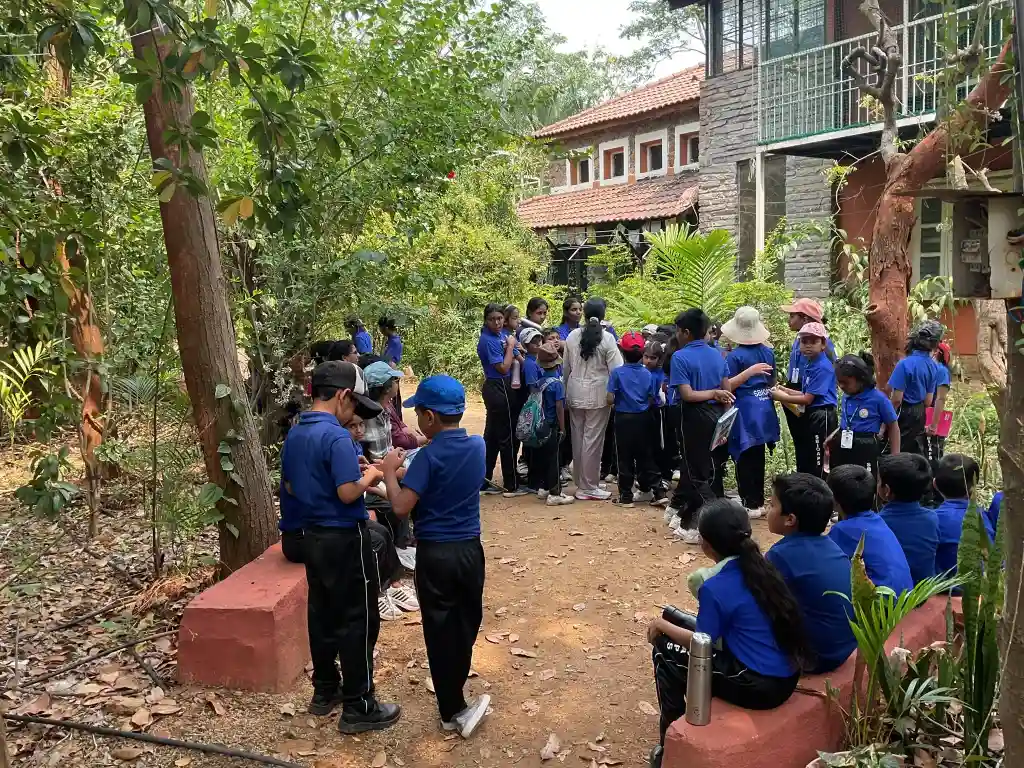
Students exploring farm surroundings during an educational visit.
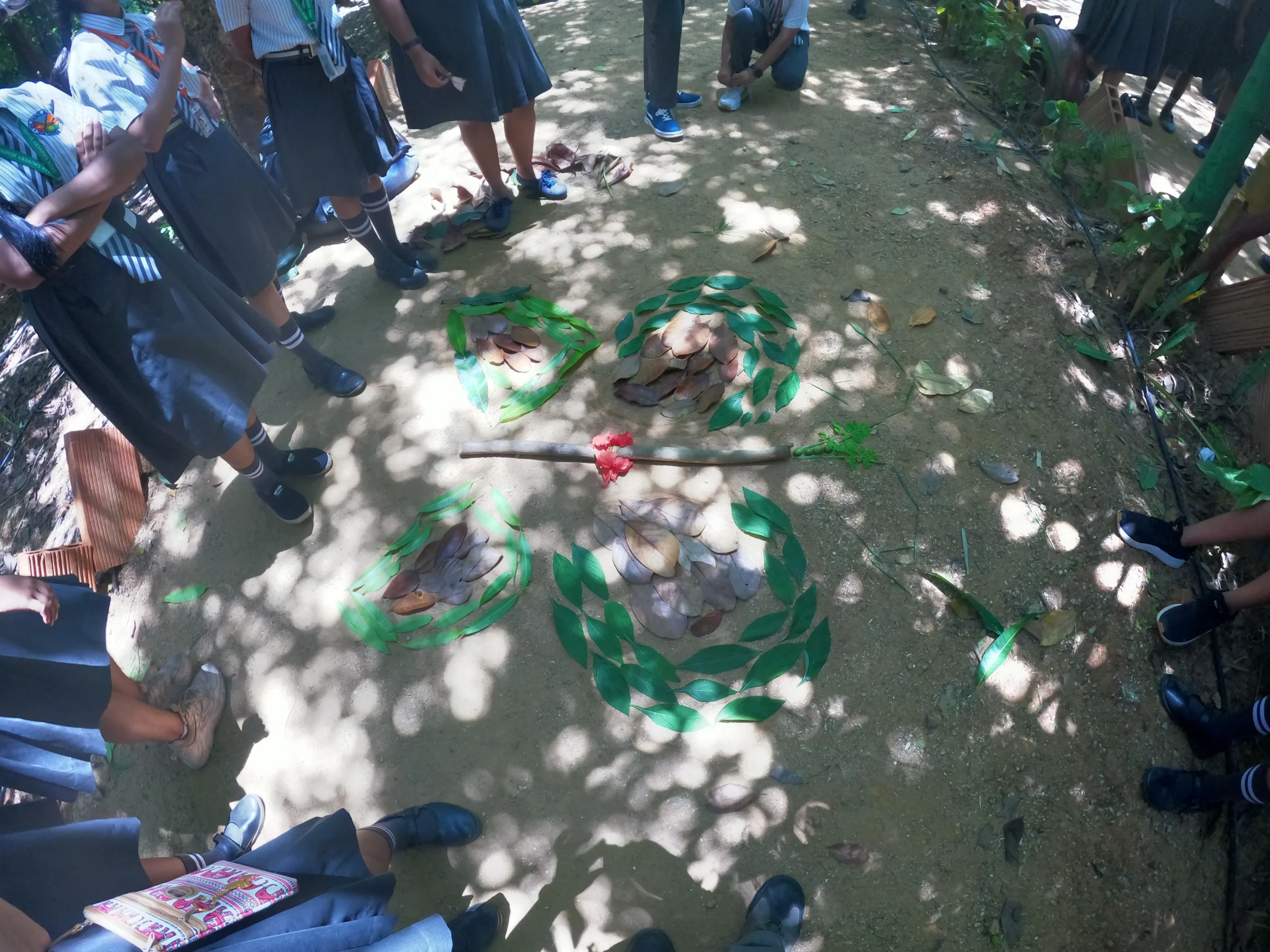
Students creating nature-inspired leaf art during an outdoor learning activity.Students exploring farm surroundings during an educational visit.
05

Where Learning Meets Nature: Give Students a Day to Remember

Imagine a day that begins with the excitement of leaving the classroom and ends with children returning home with stories they cannot wait to share.

At ChukkiMane, near Talakadu in Karnataka, students get an opportunity to experience the charm of rural life beyond textbooks. From meeting local farmers and understanding cultivation to observing indigenous cattle, exploring natural surroundings and experiencing traditional village activities, every interaction can open a new window of learning.

Children can discover how seeds become food, why farmers care for the soil, how animals contribute to rural ecosystems and why protecting nature matters. They can also experience the simplicity of village traditions and understand the value of community, patience and working together.

These are not lessons that end when the school bell rings. They are experiences that encourage children to become more observant, responsible and appreciative of the world around them.

A school excursion does not always need grand attractions or elaborate itineraries. Sometimes, all it takes is a field, a farmer, a handful of seeds and a little curiosity to create a memory that stays for years.

So, what if your next school trip wasn't just another outing, but a day that changed how children see the world?

Bring your students closer to nature, agriculture and the roots of Karnataka. Let them discover, explore, question and learn at ChukkiMane.

FAQs – Educational Farm Visits for School Students in Karnataka

1. What is an educational farm visit, and why is it important for school students?
An educational farm visit is a practical learning experience where students explore agriculture, farming, nature, animals and rural lifestyles. It helps children understand real-world concepts through observation, interaction and hands-on activities.

2. What activities can students participate in during a farm visit?
Students can experience seed planting, organic farming demonstrations, composting, birdwatching, nature walks, animal interactions, crop identification, traditional village games and farmer interactions, depending on the destination and season.

3. Which is a good destination for an educational farm visit near Bangalore?
ChukkiMane, near Talakadu in Karnataka, offers school and college groups opportunities to explore rural life, farming practices, indigenous cattle, biodiversity and traditional village experiences.

4. How does a farm visit support classroom learning?
It connects textbook concepts with real-life experiences. Students can observe plant growth, understand ecosystems, explore soil conservation and learn about agriculture through practical exposure.

5. Is an educational farm visit suitable for kindergarten and primary school children?
Yes. Activities such as identifying plants, observing butterflies, planting seeds and exploring nature can be adapted to younger students, with appropriate supervision.

6. How can schools organise an educational farm trip in Karnataka?
Schools should identify learning objectives, select a suitable destination, coordinate group size and activities, arrange transportation, obtain parental consent and ensure adequate supervision and safety arrangements.

7. What should students carry for an educational farm visit?
Students should carry comfortable clothing, suitable footwear, drinking water, a cap, sunscreen and a notebook for observations. Schools should communicate any additional requirements beforehand.

8. How does a farm visit teach children about sustainability?
It helps students understand soil health, water conservation, organic farming, biodiversity, responsible resource use and the importance of protecting the environment.

9. Can schools arrange group educational visits at ChukkiMane?
Yes. ChukkiMane welcomes school and college group enquiries for educational and experiential rural visits. Schools can contact the team to discuss group requirements, activities and scheduling.

10. What makes ChukkiMane different from a regular school picnic destination?
ChukkiMane combines recreation with opportunities for experiential learning. Students can explore agriculture, rural traditions, nature and indigenous cattle while experiencing the simplicity of village life.