
facebook
  • ChukkiMane
  • No Comments
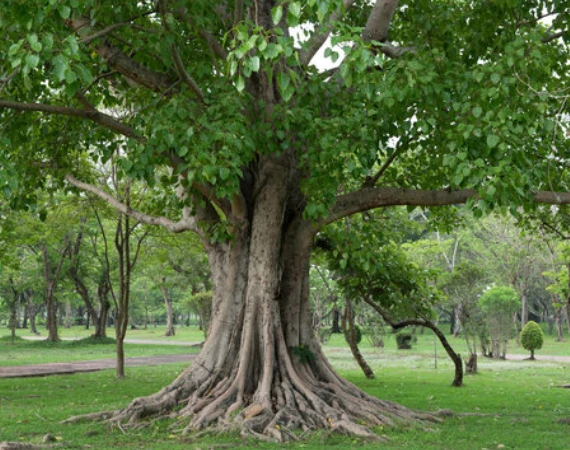
Ancient Peepal tree or Arali Mara providing shade and oxygen

Ancient & Heritage Trees of Karnataka: The Living Stories Around the Kaveri

Native trees in Karnataka landscape

Ancient & Heritage Trees of Karnataka: The Living Stories Around the Kaveri

ChukkiMane, Karnataka
Some trees are older than the stories we tell beneath them. Around the Kaveri, ancient Banyans, Peepals, Arjuns, Figs and Jamun trees have quietly watched villages grow, seasons change and generations pass. Walk beneath their canopies and you may discover that these are not simply trees — they are living homes, feeding stations, landmarks and storytellers of the Kaveri landscape.

What If the Oldest Residents of the Kaveri Are the Trees?

When you walk through the landscape around Belakavadi, ChukkiMane, the Kaveri and the surrounding agricultural lands, it is easy to notice the river, fields and birds first.

But look up.

Some of the most remarkable residents of this landscape have been standing silently for generations.

An enormous Banyan spreading its branches across the sky. A Peepal rising beside a village path. An Arjun standing close to the river. A Jamun tree waiting for its fruits to ripen. A Cluster Fig covered with tiny fruits that can suddenly turn a quiet tree into a busy wildlife gathering place.

These old native trees are more than beautiful landmarks. Large mature trees can function as important ecological structures, providing food, shelter, nesting spaces and habitat for many organisms. Research on the Cauvery landscape has specifically identified mature Terminalia arjuna trees as important keystone structures within riparian ecosystems.

Some heritage trees around this landscape are believed to be many decades or even centuries old. Their exact ages may be difficult to establish without scientific dating, but their enormous trunks, mature canopies and long-standing presence tell another story — one of continuity.

They were here before today’s roads, buildings and busy schedules.

And they are still here.
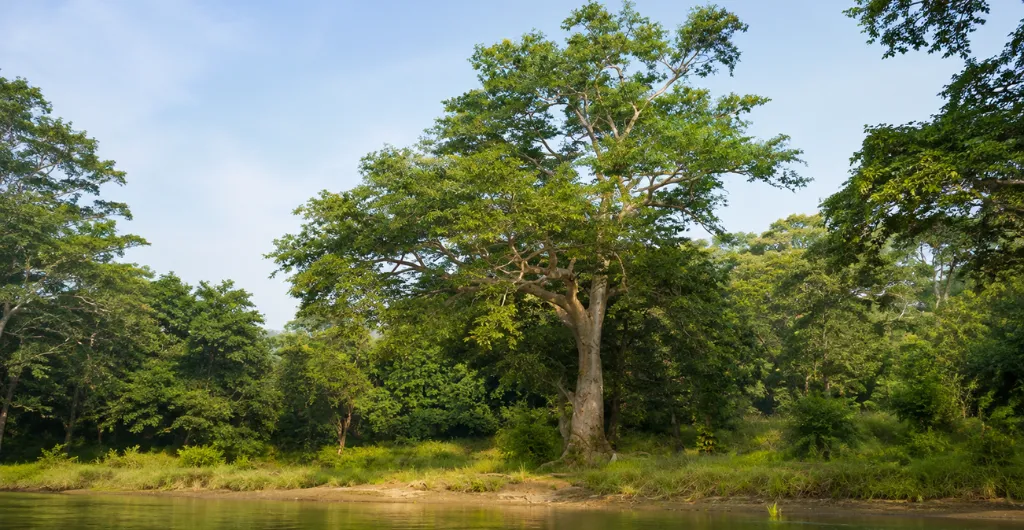
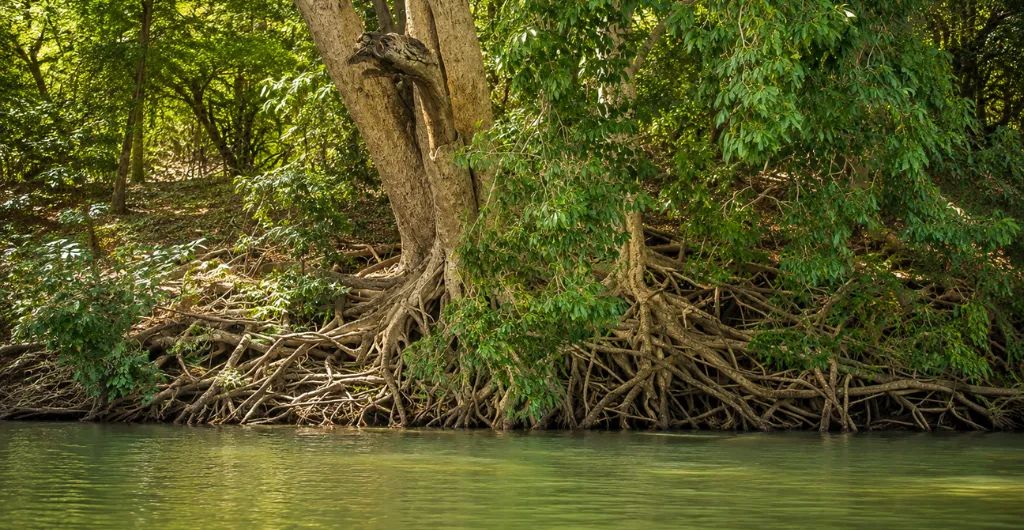
Kaveri riverside heritage tree

The Tree Is Never Just a Tree

Spend a few quiet minutes beneath an old Banyan and something fascinating begins to happen.

A bird calls from somewhere inside the canopy. A squirrel moves between branches. Bees work among flowers. Fallen fruits disappear into the forest floor. Leaves become part of the soil. Roots hold the earth. Shade creates a cooler space beneath the canopy.

One tree becomes a miniature world.

This is particularly true of the Ficus family. Banyan, Peepal, Cluster Fig and other fig trees can provide important food resources for fruit-eating wildlife. Studies by the Wildlife Institute of India have described Ficus species as keystone food resources for frugivorous communities, particularly when other fruits are scarce.

The Arjun tells another story.

Along the Kaveri, Terminalia arjuna is a characteristic riparian tree. Its large roots and river-edge growth contribute to bank stability, while its mature canopy creates habitat for other organisms. Research specifically examining Arjun trees along the Cauvery found differences in plant diversity and soil conditions beneath their canopies compared with areas without them.

So when you see an old tree around ChukkiMane, don’t simply ask, “How old is this tree?”

Ask:

“How many lives depend on it?”

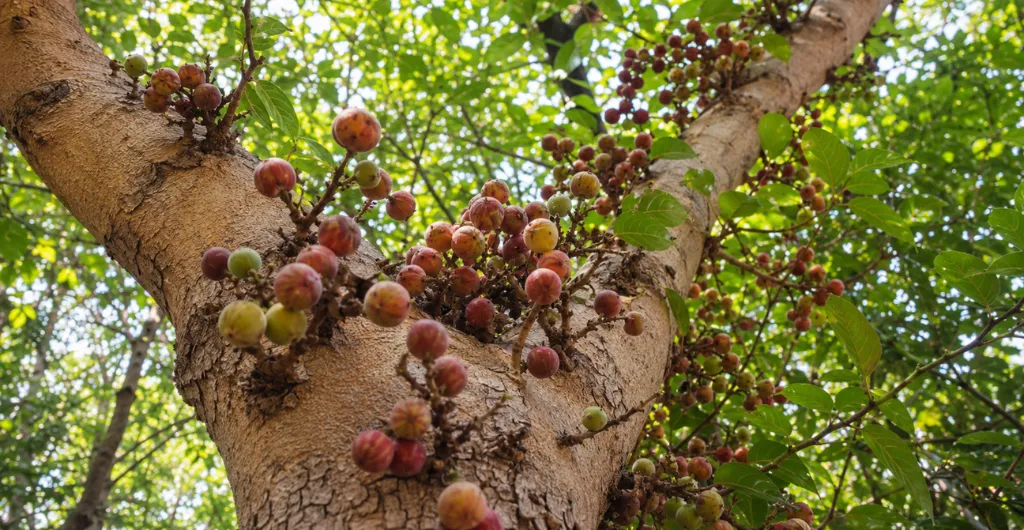
Cluster Fig tree with ripe fruits

Meet the Ancient Trees — Three Ways to Read Their Stories

The Trees That Stand Beside Water

Arjun — Hole Mathi (Terminalia arjuna): A signature riparian tree associated with riverbanks and the Kaveri landscape.

Jamun — Nerale (Syzygium cumini): Its fruit becomes a seasonal food source for birds and fruit-eating animals.

Cluster Fig — Atti Mara (Ficus racemosa): Its fruits attract birds, bats and other wildlife.

Indian Beech — Honge (Pongamia pinnata): Commonly associated with village landscapes, roadsides and waterways.

The Trees That Create Wildlife Worlds

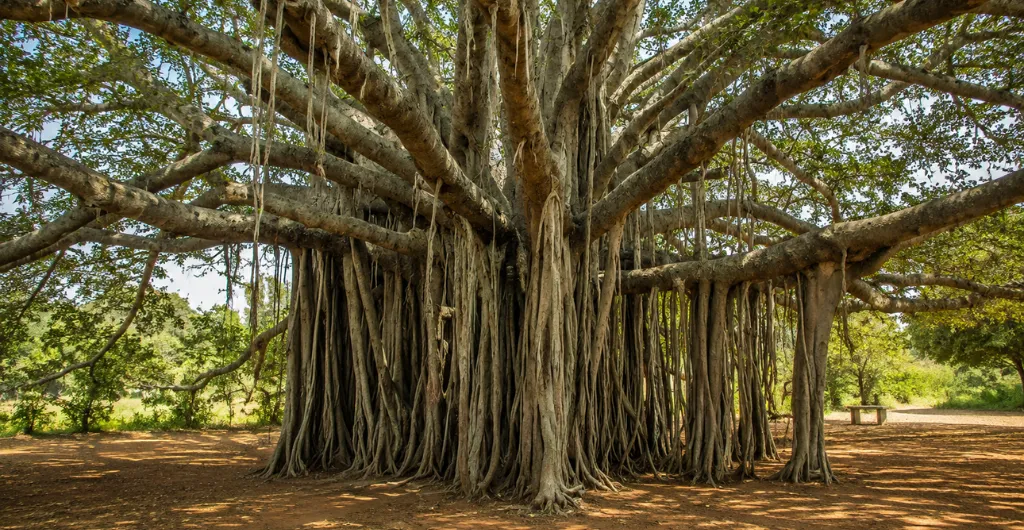
Banyan — Aalada Mara (Ficus benghalensis): Its enormous canopy and aerial roots create shelter and habitat for numerous organisms.

Peepal — Arali Mara (Ficus religiosa): A culturally significant tree whose figs provide food for several bird species.

White Fig — Basari (Ficus virens): A broad-canopied native tree offering shade, food and perching spaces.

Indian Laurel Fig — Ala (Ficus microcarpa): A village-associated tree used by birds and small mammals.

The Trees That Carry Village Memory

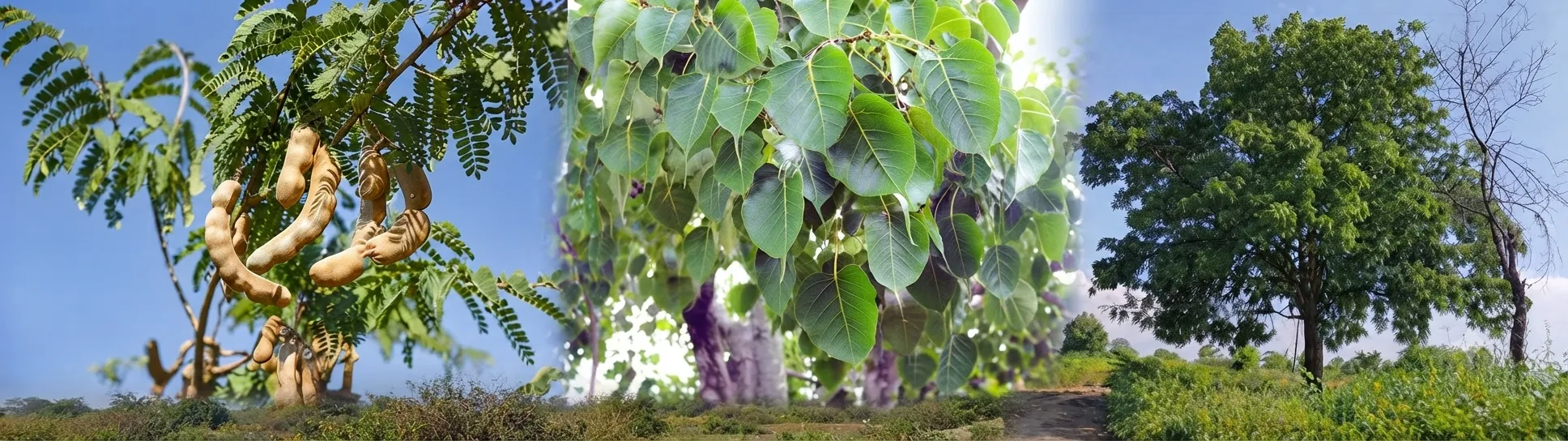
Tamarind — Hunase (Tamarindus indica): A familiar village tree connected with food, shade and rural life.

Neem — Bevu (Azadirachta indica): Deeply woven into traditional village knowledge and everyday life.

Nux-vomica — Kanjala (Strychnos nux-vomica): A distinctive native tree associated with dry deciduous landscapes.

Mysore Fig — Kallu Atti (Ficus mysorensis): A lesser-known native fig adding to the diversity of the Kaveri landscape.

Follow the Trail and the Trees Begin Telling Stories

Imagine starting a morning walk while the air is still cool.

The first stop is an ancient Banyan. Its branches seem to stretch in every direction, creating a natural roof above you. Somewhere overhead, a parakeet calls. A few metres away, a Peepal stands quietly, its leaves moving with every passing breeze.

The trail continues towards the river.

Here, the character of the landscape changes. The Arjun trees rise beside the Kaveri, their large trunks and broad crowns marking the river’s edge. Terminalia arjuna is a well-documented riparian species along the Cauvery, and research has highlighted the ecological importance of these mature trees in the river landscape.

Further along, a Cluster Fig may reveal another side of the forest.

Instead of looking for animals, you begin looking at the tree itself.

Are there fruits?

Are birds arriving?

Can you hear calls inside the canopy?

You aren’t simply ticking off tree names. You are learning to understand the relationship between trees, birds, insects, soil, water and people.

And slowly, the landscape starts looking completely different.

“This is what makes a heritage tree walk around ChukkiMane different from an ordinary nature walk.”
Ancient Banyan tree with aerial roots

Why Saving an Ancient Tree Means Saving Much More Than a Tree

An old tree cannot be replaced simply by planting another sapling.
A sapling may eventually become a large tree, but the ecological relationships built around an ancient tree take decades to develop. Cavities appear. Branch structures mature. Fungi, insects and microorganisms establish themselves. Birds find nesting places. Bats find roosts. Fruit becomes available at particular times of the year. Shade changes the microhabitat beneath the canopy.

Why Mature Native Trees Matter

That is why mature native trees are so valuable. A heritage tree is simultaneously a piece of natural history, a wildlife habitat, a cultural landmark and a living connection between generations.

Living History

Around the Kaveri, trees such as Arjun, Banyan, Peepal, Cluster Fig, Basari, Jamun, Honge, Tamarind, Neem and Kanjala help tell the story of a landscape where nature and village life have existed side by side for generations.

More Than a Tree

At ChukkiMane, these trees can become more than something guests walk past. They can become something guests remember — connecting visitors with the landscape in a way that goes beyond sightseeing.

Moments to Remember

A quiet walk beneath an ancient Banyan. A glimpse of a bird feeding on a fig. The sound of the Kaveri flowing beside an Arjun tree. The shade of a Basari on a warm afternoon.

Look Up

Sometimes, the most memorable part of a journey is not something you photograph. It is something that has been standing there for hundreds of seasons — waiting for you to look up.

Native tree along the Kaveri riverbank

Come for the Kaveri. Stay for the Stories the Trees Tell.

Some of these trees have been standing here for generations. Walk beneath them, and you may see the landscape differently.

What If These Trees Could Tell You What They’ve Seen?

Generations have lived, farmed and travelled beneath these ancient trees. Follow their shade through the Kaveri landscape and uncover stories of wildlife, village life, tradition and nature that are still growing today.

Frequently Asked Questions

1. What are heritage trees?

Heritage trees are old, culturally significant, ecologically important or historically valuable trees that have a special connection with a landscape or community.

2. Which ancient trees can be found around the Kaveri landscape?

Native and heritage trees associated with the landscape include Arjun, Banyan, Peepal, Cluster Fig, White Fig, Jamun, Honge, Tamarind, Neem and Kanjala, among others.

3. Why are Ficus trees important for wildlife?

Ficus trees can provide important fruit resources for birds, bats and other fruit-eating animals. Wildlife Institute of India research identifies Ficus species as important, sometimes keystone, food resources in forest ecosystems.

4. Why is the Arjun tree important around the Kaveri?

Arjun (Terminalia arjuna) is a characteristic riparian tree found along riverbanks, including the Cauvery landscape. Its mature structure contributes to river-edge habitat, soil conditions and ecological diversity.

5. What birds can be seen around these heritage trees?

Depending on season and location, visitors may encounter parakeets, bulbuls, barbets, mynas, koels, kingfishers, orioles and other birds associated with mature tree habitats.

6. Why are old trees important for birds and animals?

Large mature trees provide food, shade, shelter, nesting locations, roosting spaces and movement corridors for many forms of wildlife.

7. Can children learn about trees through a heritage tree walk?

Yes. A guided tree walk can turn a simple outdoor walk into an engaging learning experience, helping children understand biodiversity, native trees, birds, insects, river ecosystems and traditional knowledge.

8. What makes a heritage tree walk different from ordinary sightseeing?

Instead of simply seeing trees as scenery, a heritage tree walk explains the relationships between trees, wildlife, water, soil, culture and people — allowing visitors to experience the landscape more deeply.