

facebook
  • ChukkiMane
  • No Comments
Spot Billed Duck

Meet Our Indian Spot-Billed Duck at ChukkiMane

Indian Spot billed Duck

Meet Our Indian Spot-Billed Duck at ChukkiMane

ChukkiMane, Karnataka
Nature lovers visiting ChukkiMane are often delighted by unexpected yet serene bird sightings, and one such graceful presence is the Indian Spot-Billed Duck. Found near calm freshwater bodies, ponds, and wetland pockets around the Kaveri river basin, this beautiful duck adds charm to the bird-rich ecosystem surrounding the resort.
Watching these ducks glide smoothly across the water or forage peacefully along the edges is a gentle reminder of how alive and balanced the natural environment at ChukkiMane truly is.

Understanding the Indian Spot-Billed Duck

The Indian Spot-Billed Duck is a resident freshwater duck species commonly found across southern India, including Karnataka. It prefers quiet wetlands, lakes, and slow-moving water bodies — habitats that naturally exist around ChukkiMane.

These ducks are known for their calm nature and steady movements, often seen swimming gracefully or feeding by dabbling in shallow water. Their presence reflects a healthy wetland ecosystem, making them an important part of the local biodiversity.
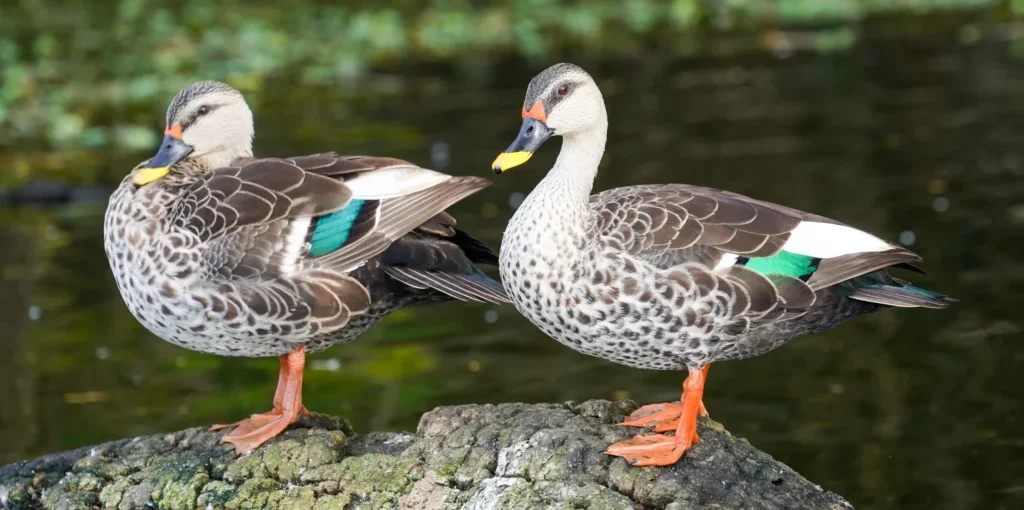
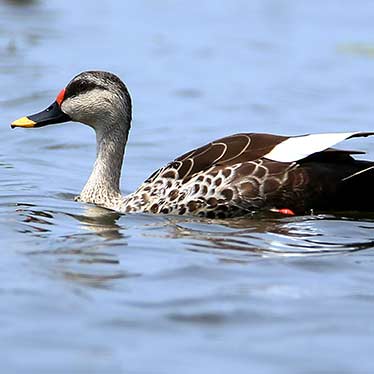
Indian Spot Billed Duck at ChukkiMane

How to Identify the Indian Spot-Billed Duck

Guests who enjoy birdwatching can identify this species by observing:

• A dark bill with a bright yellow tip

• A distinct red spot at the base of the bill

• Soft brown and grey patterned feathers

• White markings along the wing edges

• Orange-coloured legs, visible when walking near water

These visual features make the Indian Spot-Billed Duck relatively easy to recognize, even for beginner birdwatchers.

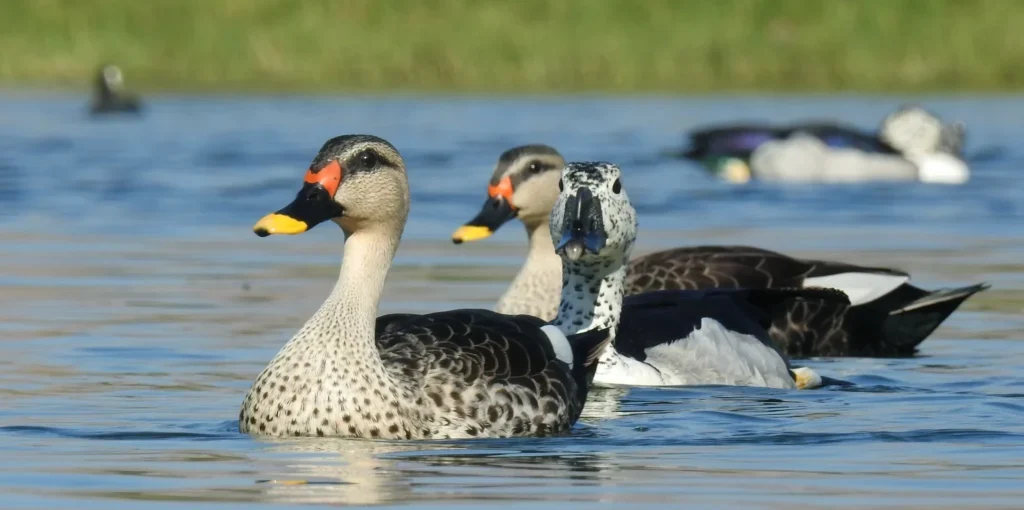
Pair_Indian_Spot-billed_Duck at ChukkiMane

Where Guests Spot Them at ChukkiMane

Wetland Walks & Open Spaces

Walk along open fields and water edges where Indian Spot-billed Ducks are often seen resting, feeding, or quietly moving through shallow wetlands.

Quiet Mornings & Birdwatching

Early mornings offer the best chance to observe ducks swimming in pairs, preening feathers, and feeding peacefully in a calm, undisturbed setting.

Rural Calm & Natural Habitat

The slow pace of village life allows birds to behave naturally—resting, feeding, and moving freely without human disturbance.

Why This Bird Matters to the ChukkiMane Experience

The Indian Spot-Billed Duck adds immense value to the overall nature experience at ChukkiMane:

• It enhances birdwatching opportunities for guests

• It introduces children to wetland wildlife learning

• It attracts nature photographers and bird enthusiasts

• It reflects the ecological richness of the Kaveri basin

“For many visitors, spotting this duck becomes one of those quiet, memorable moments that define their stay”
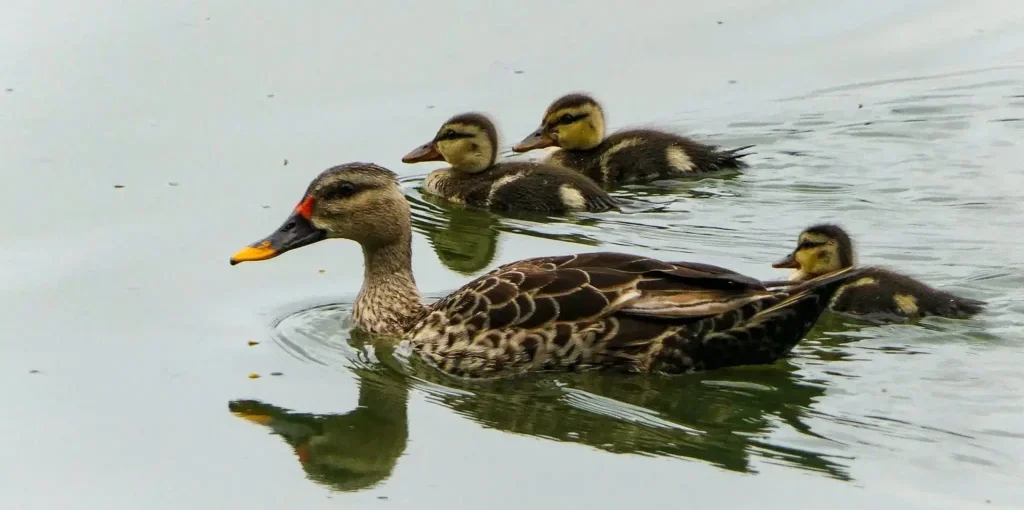
Duck_ducklings at ChukkiMane

A Peaceful Sight for Families & Nature Lovers

It’s not a loud or dramatic sighting — but one that gently stays in memory.
Families often find joy in watching these ducks together — children asking questions, adults observing calmly, and everyone sharing a moment of stillness. The slow, unhurried movements of the Indian Spot-Billed Duck perfectly mirror the relaxed pace that ChukkiMane encourages.
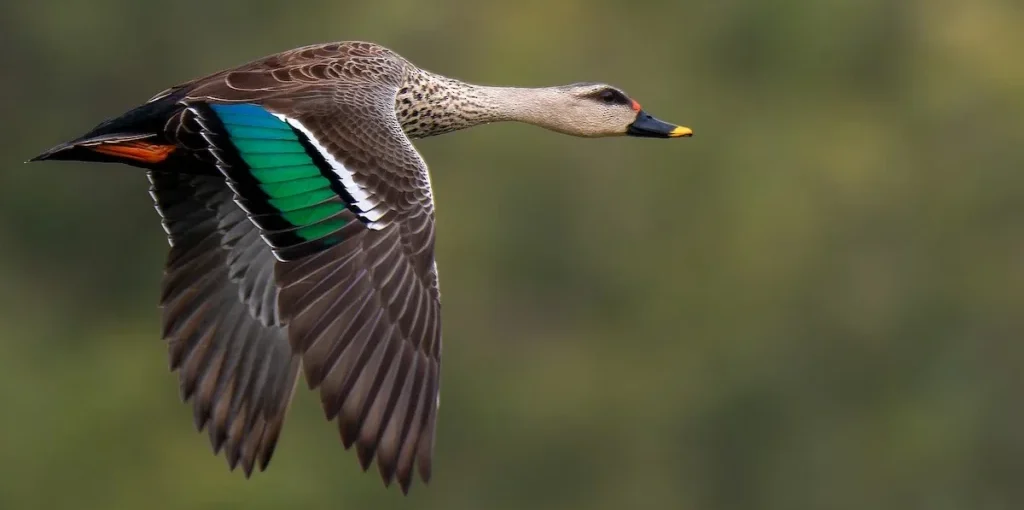
Flying Duck

Nature doesn’t always announce its beauty loudly.

Sometimes it glides quietly across the water — like the Indian Spot-Billed Duck — reminding guests at ChukkiMane to
slow down, observe, and appreciate the delicate balance of life around them.

A Quiet Wetland Companion of ChukkiMane

The Indian Spot-billed Duck finds a natural home in the ponds and wetland-like surroundings of ChukkiMane. Observed during quiet mornings and peaceful evenings, this species plays an important role in maintaining healthy aquatic ecosystems.

FAQs about Indian Spot-Billed Duck

Is the Indian Spot-Billed Duck commonly seen at ChukkiMane?
Yes, guests often spot them near water bodies and wetland areas around the resort.

Is this duck migratory?
No, it is a resident species commonly found throughout the year in suitable habitats.

Can children enjoy spotting this bird?
Absolutely. Its calm behaviour makes it easy and interesting for kids to observe.

What time of day is best to see them?
Early mornings and late afternoons offer the best chances for sightings.

Is the bird safe and non-aggressive?
Yes, it is a peaceful species that avoids disturbance.

Does spotting this bird require special equipment?
No — keen observation and patience are enough, though binoculars enhance the experience.