

facebook
  • ChukkiMane
  • No Comments
The rustic, welcoming exterior of the ChukkiMane house nestled within a lush, bird-filled garden

What Do You Really Need for Birdwatching? A Beginner’s Guide to Exploring the World of Birds

What Do You Really Need for Birdwatching?

A Beginner's Guide to Exploring the World of Birds

✽

Ever spotted a beautiful bird and wondered what it was called? Or heard a mysterious bird call and wished you knew who was singing? Birdwatching is an adventure that begins with curiosity, not expensive equipment. With a few simple essentials, helpful apps, and an observant eye, you can discover an entirely new world hiding in plain sight. Here's everything you need to get started!

01

Before You Look Up, Know What to Carry!

Imagine walking through a green landscape, hearing birds calling from different directions, and suddenly spotting a colourful bird sitting on a distant branch. Exciting, isn't it? But how do you get a closer look without disturbing it?

You don't need a professional photography setup or an entire bag of equipment to enjoy birdwatching. A few simple essentials can make your experience much more enjoyable. A pair of binoculars helps you observe birds from a distance, while a small notebook lets you record interesting sightings, colours, behaviour, and bird calls. Comfortable walking shoes, drinking water, a cap, and weather-appropriate clothing will help you enjoy longer outdoor explorations.

If you enjoy photography, a camera or smartphone with a good zoom can help capture memorable sightings. But remember, the most important thing to carry is patience. Birds don't always appear when you expect them to!

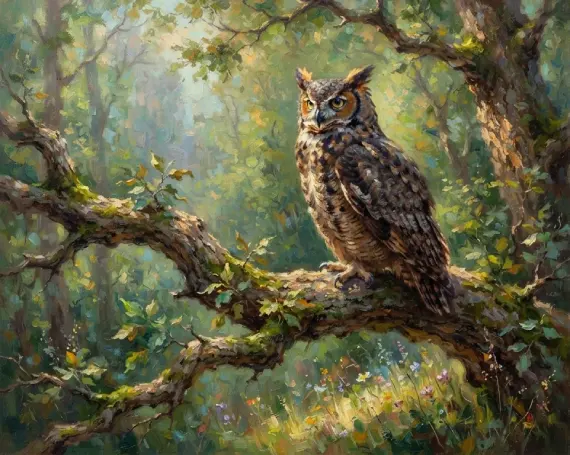
A close-up view of a majestic Great Horned Owl alert on a mossy forest branch
02

Your Phone Can Become Your Birdwatching Companion!

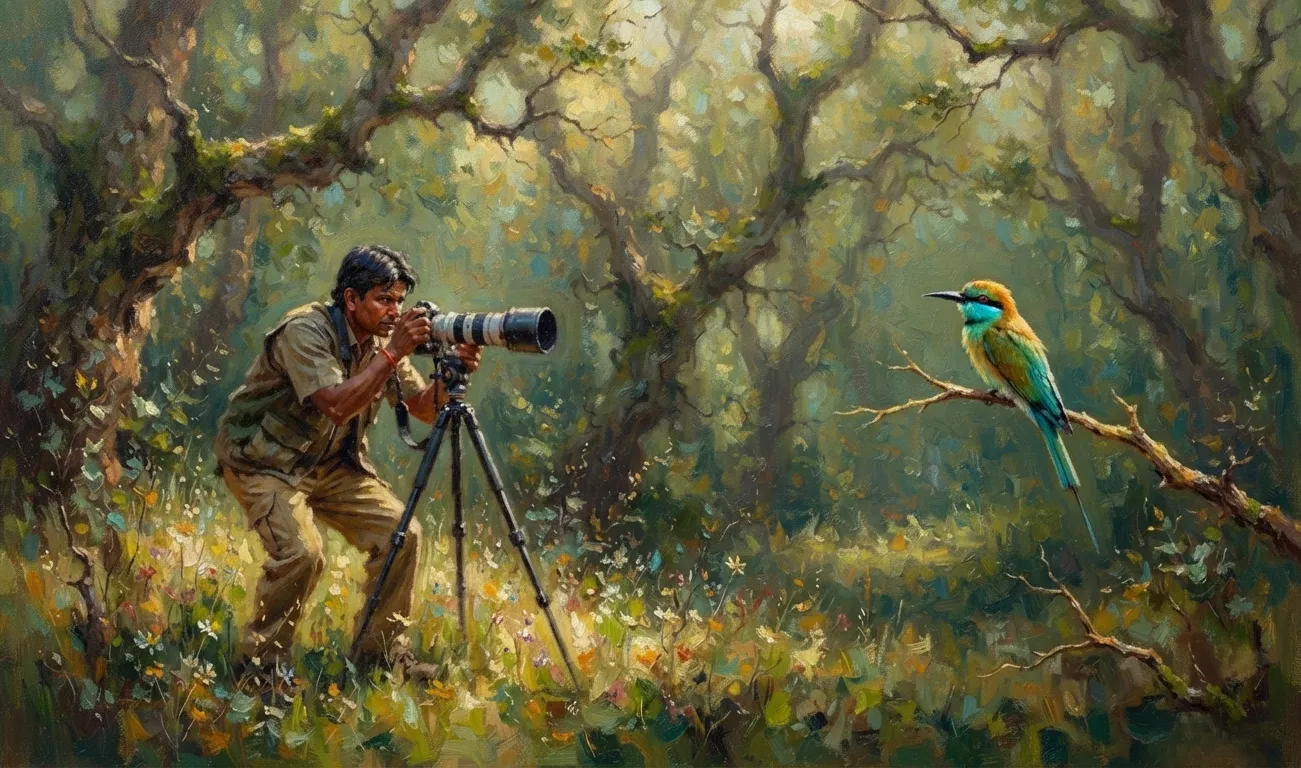
A wildlife photographer capturing a close-up shot of a vibrant Green Bee-eater on the grounds of ChukkiMane

What if you could identify a bird simply by listening to its call? Or discover its name by taking a photograph? Technology has made birdwatching more accessible than ever.

One of the most useful tools for beginners is the Merlin Bird ID app by Cornell Lab of Ornithology. It acts like a pocket-sized bird identification guide, helping you recognise birds through photographs, sounds, and simple identification questions.

You can use Merlin in three particularly interesting ways: Sound ID helps suggest birds based on their calls, Photo ID provides possible matches from bird photographs, and the step-by-step identification feature helps narrow down a bird using details such as its size, colours, location, and behaviour.

Before heading outdoors, install Merlin Bird ID and download the relevant India bird pack so that you can explore its bird information, sounds, and identification features even when internet connectivity is limited.

Remember, app suggestions are a helpful starting point, not a substitute for careful observation. Always verify uncertain identifications.


03

Three Online Resources Every Beginner Birder Should Know

01

eBird – Discover Where Birds Are Spotted

  • Explore bird species recorded in different locations.
  • Find birdwatching hotspots and recent sightings.
  • Maintain your own bird observation checklists.
  • Learn how your observations contribute to bird research and conservation.
02

Early Bird – Learn About Indian Birds

  • Explore beginner-friendly bird guides and educational resources.
  • Discover pocket guides, flashcards, posters, and bird activities.
  • Access interactive learning materials for children.
  • Find resources designed for educators and young birdwatchers.
03

Bird Count India – Become Part of Citizen Science

  • Discover bird surveys and citizen-science initiatives in India.
  • Learn about bird identification and observation.
  • Explore resources for beginner birdwatchers and educators.
  • Participate in bird counts and contribute observations.

iNaturalist – Discover Birds Spotted Around Bangalore

Ever wondered which birds have been spotted around Bangalore? You don’t have to rely only on bird books or guess what you see during a nature walk!

iNaturalist allows you to explore wildlife observations contributed by nature enthusiasts and citizen scientists. Its Bangalore page lets you discover bird species recorded in the region, explore photographs, and learn more about local biodiversity.

It is a wonderful way to prepare for your next birdwatching adventure and understand what might be flying around your surroundings.

A scenic view of an Indian Grey Hornbill and an Asian Paradise Flycatcher by a tranquil river and green paddy fields
04

The Golden Rules of Birdwatching: Observe Without Disturbing

Birdwatching is not just about spotting as many species as possible. It is also about respecting the little lives we are observing.

Imagine finding a bird building its nest or feeding its young. Getting too close for a photograph could disturb an important moment in its life. Responsible birdwatching means enjoying these discoveries without interfering with nature.

Keep a comfortable distance from birds, avoid loud conversations, and never chase them to get a better view. Avoid touching nests, eggs, or chicks, and never use recorded bird calls excessively to attract birds. Stay on designated trails wherever possible and leave the surroundings exactly as you found them.

Teach children to observe quietly, listen carefully, and appreciate even the smallest creatures. The goal is not to make birds come closer to you; it is to learn how to appreciate them in their natural surroundings.

An experienced guide pointing out hanging weaver bird nests to visitors during a birdwatching excursion
05

Now That You Know What to Carry, Are You Ready to Spot Your First Bird?

The first bird you identify yourself is an experience worth remembering. It could be a common myna, a colourful Indian roller, a tiny sunbird, or a kingfisher sitting patiently near water. Every sighting adds a little more knowledge and excitement to your journey.

At ChukkiMane, birdwatching becomes an opportunity to step away from everyday routines and reconnect with the natural world. Surrounded by greenery, agricultural landscapes, trees, and natural habitats, guests can slow down, listen to bird calls, observe their surroundings, and discover the fascinating relationship between birds and their ecosystems.

Whether you’re bringing your children for their first outdoor learning experience, planning a family getaway, or simply looking for a refreshing nature activity, birdwatching can turn an ordinary visit into something memorable.

So, charge your phone, install Merlin Bird ID, carry your curiosity, and get ready to look at nature differently!

Your next favourite bird might be just a few steps away!

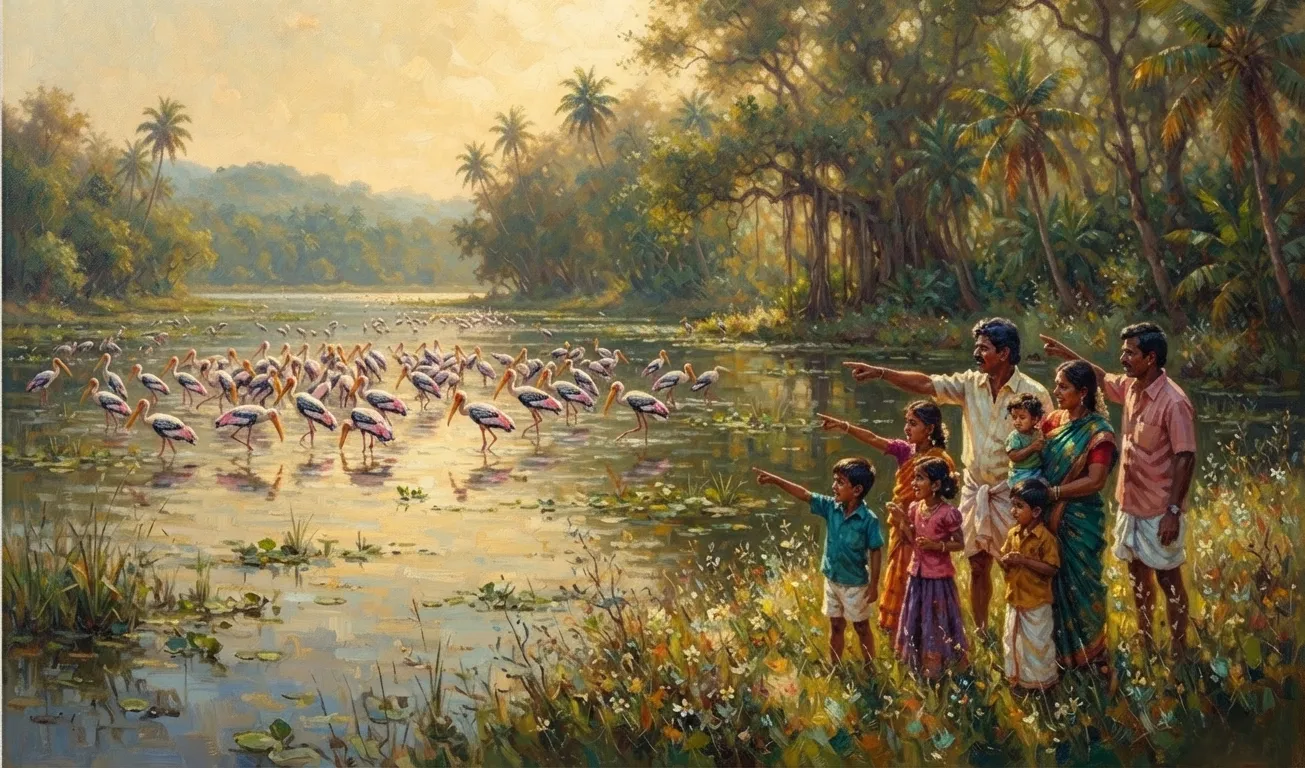
A local Indian family on a riverbank observing a large flock of Painted Storks in their natural habitat
The rustic, welcoming exterior of the ChukkiMane house nestled within a lush, bird-filled garden

FAQs – Digital Detox Weekend Near Bangalore

1. What equipment do you need for birdwatching?
Basic birdwatching equipment includes binoculars, a notebook, comfortable walking shoes, drinking water, and a camera or smartphone. Beginners can start without expensive equipment.

2. Which is the best mobile app for identifying birds?
Merlin Bird ID by Cornell Lab of Ornithology is a useful free app for identifying birds through photographs, sounds, and guided questions.

3. How can I identify birds by their sounds?
You can use the Sound ID feature in Merlin Bird ID to help identify birds through their calls and songs. Listening carefully and comparing calls with reliable bird guides also improves identification skills.

4. What is eBird and how does it help birdwatchers?
eBird is a free online platform where birdwatchers can record sightings, explore bird species, discover birdwatching hotspots, and contribute observations to a global bird database.

5. What is the Early Bird website?
Early Bird is an Indian initiative that provides educational resources about birds, including pocket guides, flashcards, posters, games, and learning activities for children and educators.

6. Can children participate in birdwatching?
Absolutely! Birdwatching encourages children to observe nature, recognise different species, understand bird behaviour, and develop curiosity about biodiversity.

7. What is the best time for birdwatching?
Early mornings are generally a good time because many birds are active, feeding, and calling. Late afternoons can also offer interesting birdwatching opportunities.

8. How do you practise responsible birdwatching?
Maintain a safe distance, avoid disturbing nests, keep noise levels low, avoid excessive playback of bird calls, and never chase or feed wild birds just to get a closer look.

9. Can beginners enjoy birdwatching without binoculars?
Yes. You can begin by observing birds with your eyes and listening to their calls. Binoculars are helpful but not essential for getting started.

10. Where can families experience birdwatching near Bangalore?
Families looking for outdoor nature experiences can explore ChukkiMane near Shivanasamudra, Karnataka, and enjoy birdwatching alongside other rural and nature-based activities.