
facebook
  • ChukkiMane
  • No Comments
Observing Grey Hornbill

Do You Know the Ecological Importance of the Indian Grey Hornbill

Indian Grey Hornbill Forest Farmer

Do You Know the Ecological Importance of the Indian Grey Hornbill

ChukkiMane, Karnataka
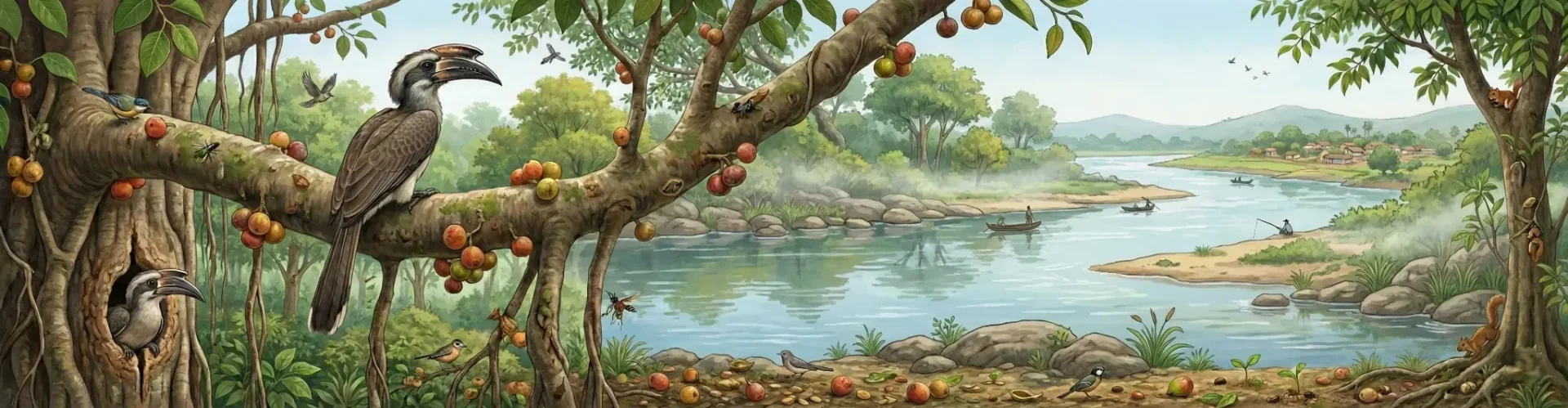
As the first light of morning touches the Kaveri river basin, the forests around ChukkiMane come alive with gentle movement in the canopy. Among the leaves, the Indian Grey Hornbill glides from tree to tree — not just as a resident of the forest, but as one of its greatest caretakers.
This bird does more than survive in nature. It sustains nature. Because of its unique seed-dispersing abilities, conservationists and ecologists proudly call the Indian Grey Hornbill, "The Farmer of the Forest" Every fruit it consumes and every seed it carries forward ensures that forests remain alive, diverse, and self-renewing for generations to come.

A Bird That Grows Forests

Forests do not regenerate on their own. Seeds must travel away from parent trees to find space, sunlight, and nutrients. Many large forest trees produce seeds too big for wind or small birds to carry. Without assistance, these trees would struggle to spread.

The Indian Grey Hornbill solves this challenge effortlessly.

It swallows large seeds whole, carries them across long distances, and deposits them naturally in new soil. Each flight after feeding becomes an act of tree planting. Over years, thousands of seeds germinate because of this daily movement.

This behaviour allows:

  • Natural forest expansion

  • Stronger genetic diversity among trees

  • Prevention of overcrowded vegetation

  • Continuous forest renewal

This is why the hornbill is rightfully known as the true Forest Farmer — a living force that keeps woodland ecosystems alive without human intervention.
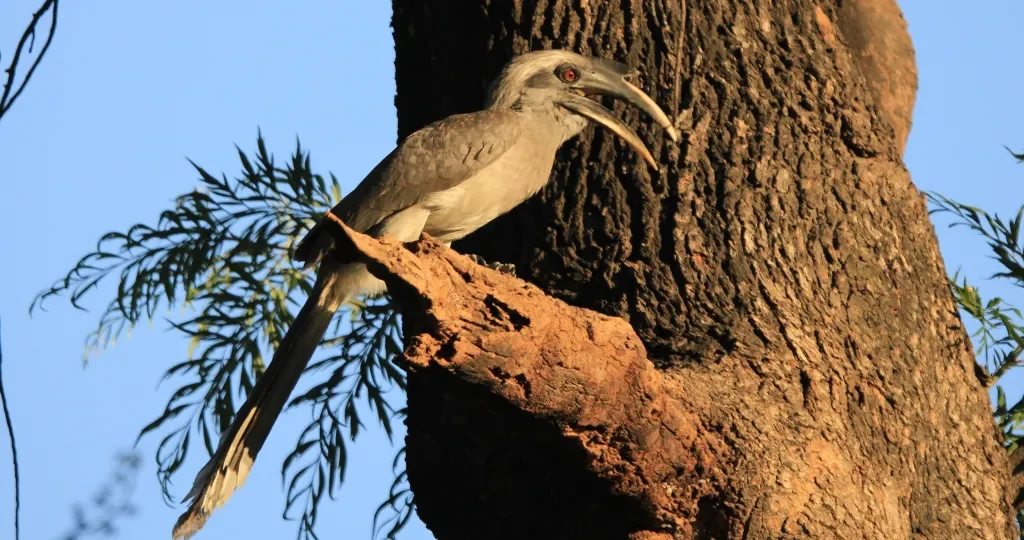
Indian-Gray-Hornbill

The Fig Tree Partnership — A Keystone Relationship

Among all forest species, the Ficus (Fig) family holds a special ecological relationship with the Indian Grey Hornbill.

Fig trees produce fruit multiple times a year, even when other trees do not. Their fruits contain large, fleshy seeds that most birds cannot swallow. The hornbill, however, is perfectly adapted to feed on these fruits and disperse their seeds.

This partnership creates a powerful ecological cycle:

  • Fig trees feed hornbills year-round

  • Hornbills disperse fig seeds widely

  • New fig trees grow across forests

  • Fig trees then support dozens of other wildlife species

Because fig trees are a major food source for many animals, the hornbill’s role in spreading fig seeds indirectly supports monkeys, deer, squirrels, insects, and countless other birds.

Around ChukkiMane’s natural landscape, this fig–hornbill relationship quietly strengthens the entire food web.

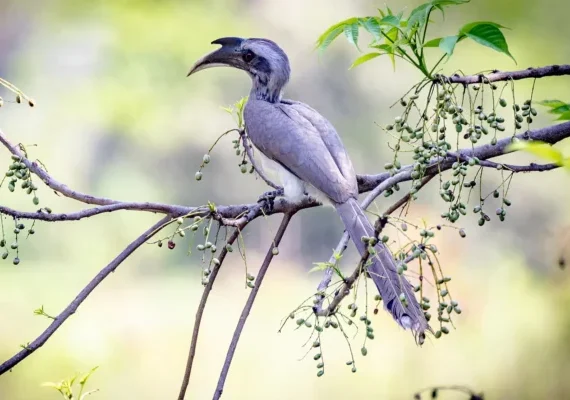
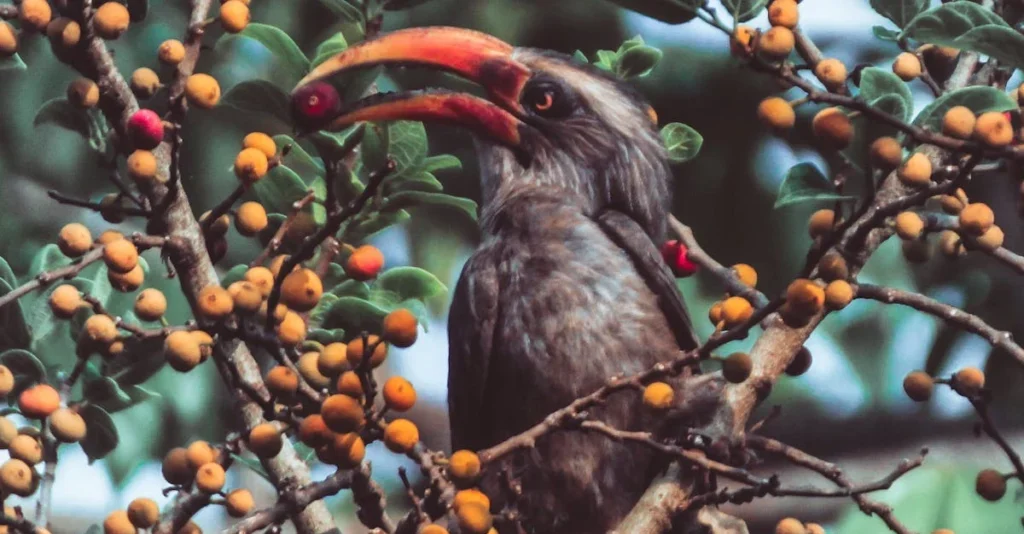
Indian grey Hornbill Feeding on it's favourite fruit

How the Indian Grey Hornbill Sustains Forest Life

Seed Dispersal Creates New Forests

Indian Grey Hornbills spread seeds across wide forest areas. Each dropped seed has the potential to grow into a new tree, renewing forest cover and ensuring continuous regeneration of woodland habitats.

Building Homes for Wildlife

As new trees grow, they create nesting spaces for birds, shelter for mammals, and food for insects — forming living layers that support thriving forest communities.

Sustaining Biodiversity Balance

By spreading many types of seeds, hornbills prevent forests from being dominated by single species — creating rich biodiversity that stabilizes ecosystems and strengthens climate resilience.

Protecting River Basin Ecosystems

Forests and rivers are deeply connected. Tree roots hold soil together, prevent erosion, and allow rainwater to seep slowly into the ground. Without continuous forest regeneration, river basins weaken over time.

By sustaining forest growth, Indian Grey Hornbills indirectly protect:

  • Soil stability

  • Groundwater recharge

  • Clean river flow

  • Local climate regulation

In the Kaveri river basin surrounding ChukkiMane, hornbill-driven forest renewal supports the health of water systems that benefit wildlife, agriculture, and nearby communities alike.

“Hornbills help keep rivers alive by keeping forests alive”
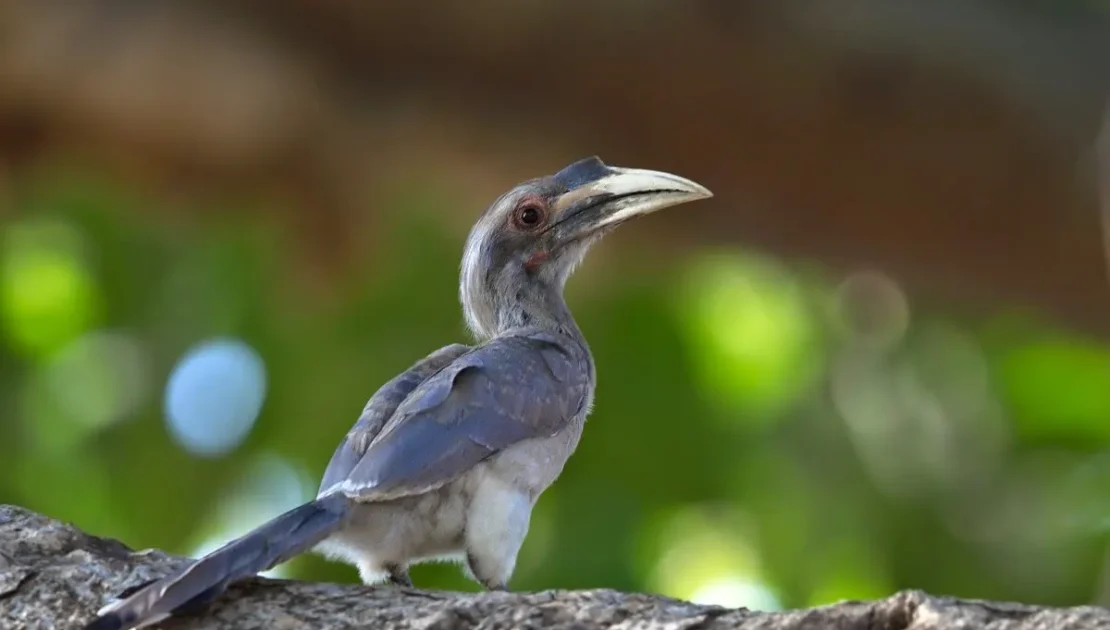
Indian Grey Hornbill

A Living Indicator of a Healthy Habitat

The Indian Grey Hornbill thrives only where: Mature fruiting trees exist Forest cover is continuous Human disturbance is minimal Air and water remain clean
Their presence is a natural environmental indicator. Where hornbills live and feed freely, the ecosystem is functioning correctly. Guests at ChukkiMane often spot hornbills during calm mornings when the forest canopy is most active. Observing them is more than wildlife watching — it is witnessing a sign that nature here remains healthy, balanced, and protected. Protecting hornbills means protecting the invisible systems that keep forests alive.
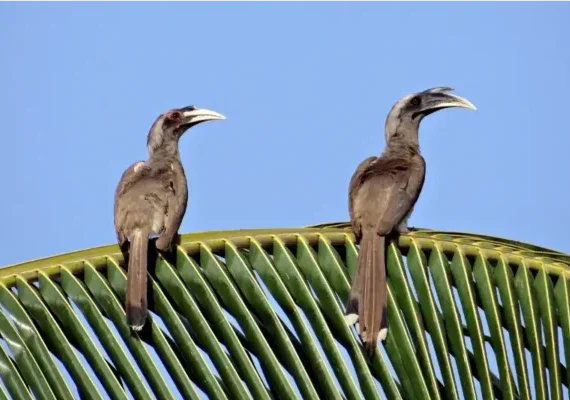
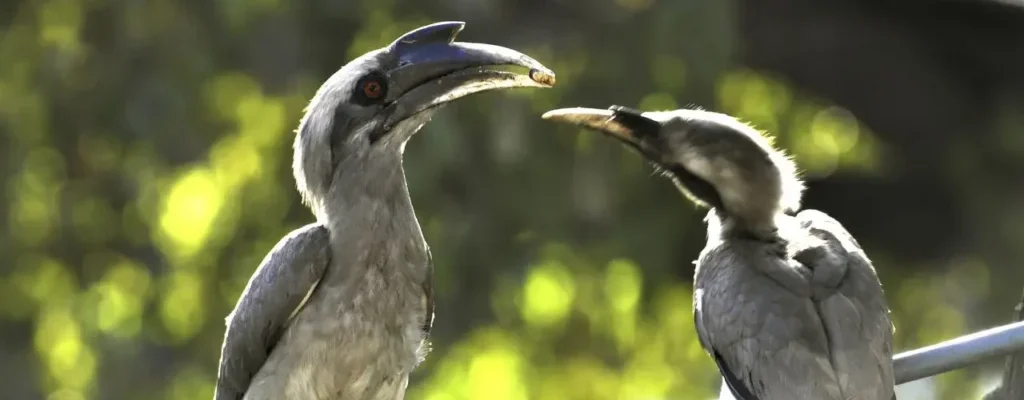
Indian-grey-hornbill couple
Indian grey hornbill

Forests do not grow by chance. They grow because silent gardeners work every day.

At ChukkiMane, the Indian Grey Hornbill continues its ancient role — growing forests, one seed at a time.

Guardians of Forest Balance

Moving quietly through treetops, the Indian Grey Hornbill spreads seeds that grow into future forests. This simple act supports wildlife habitats, strengthens biodiversity, and keeps ecosystems in balance — making the hornbill a true guardian of nature’s renewal.

FAQs — Ecological Importance of Indian Grey Hornbill

Why is the Indian Grey Hornbill called the Forest Farmer?
Because it disperses large seeds over long distances, allowing forests to regenerate naturally.

Why are fig trees important in hornbill ecology?
Fig trees fruit year-round and provide large seeds that hornbills can swallow and spread, sustaining forest food chains.

How do hornbills support biodiversity?
By spreading different seeds, they help grow varied tree species that form habitats for many animals and insects.

Do hornbills help river ecosystems?
Yes. By maintaining forest cover, they indirectly protect soil, groundwater, and river basin stability.

Is seeing hornbills at ChukkiMane a good sign?
Yes. Their presence indicates a healthy, well-preserved natural habitat.