
facebook
  • ChukkiMane
  • No Comments
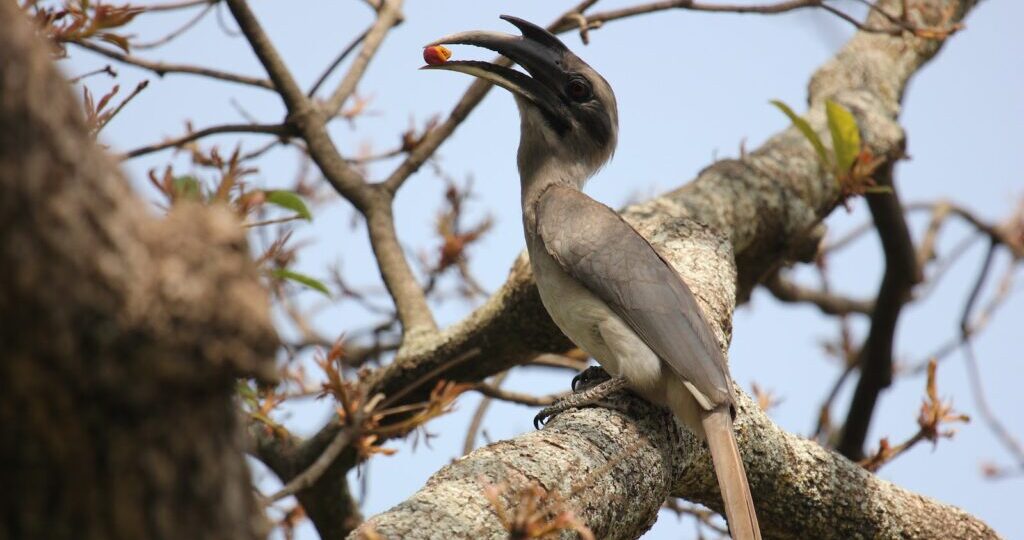
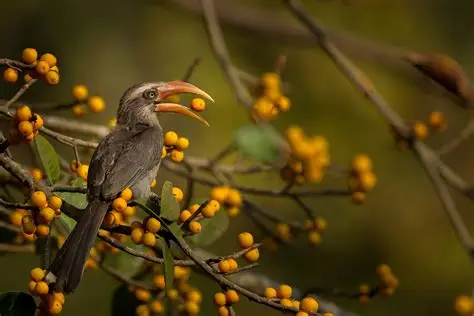
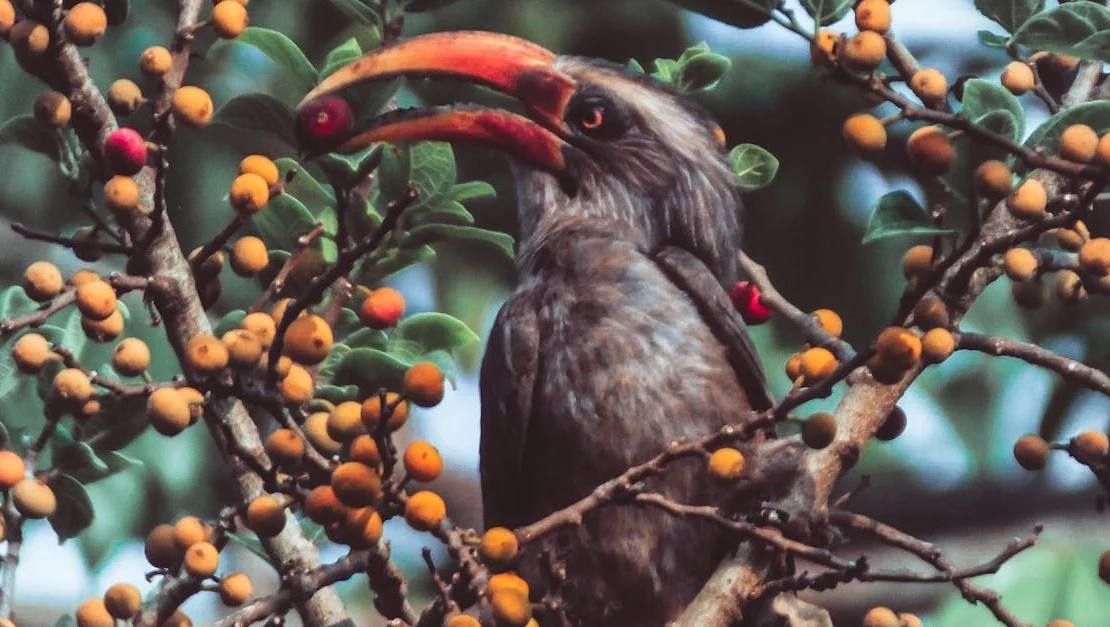
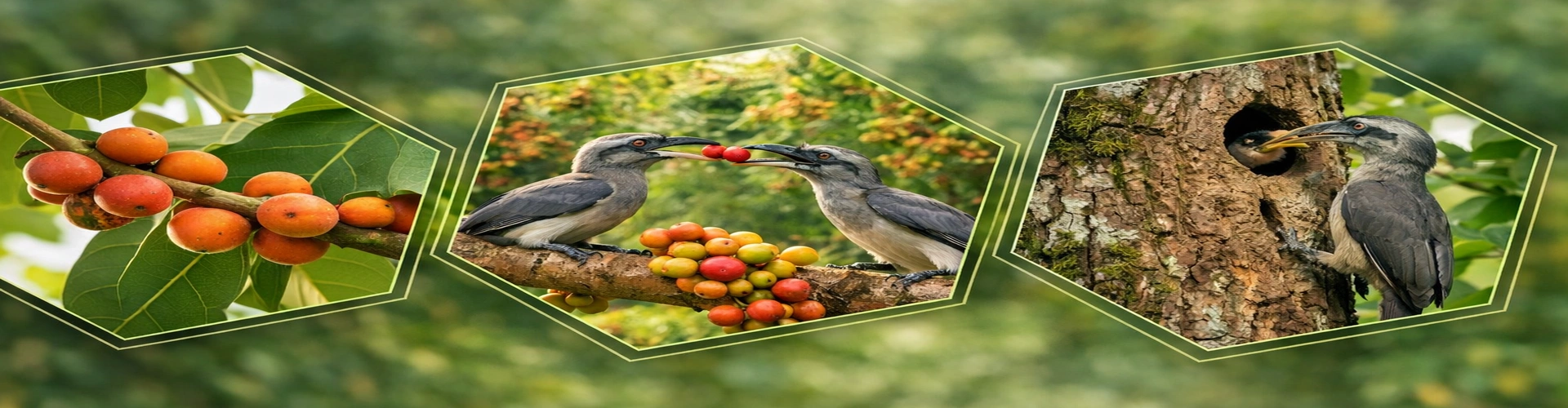
Indian grey Hornbill Feeding on it's favourite fruit

Do You Know What the Indian Grey Hornbill Feeds On?

Hornbill Diet Banner

Do You Know What the Indian Grey Hornbill Feeds On?

ChukkiMane, Karnataka
The Indian Grey Hornbill is more than a forest resident — it is a forest gardener. Its feeding habits directly influence how trees grow, spread, and regenerate across landscapes.
Early mornings around ChukkiMane are alive with nature’s rhythm — mist rising from the Kaveri river basin, leaves rustling in gentle wind, and the unmistakable call of the Indian Grey Hornbill. Guests often admire this elegant bird for its striking appearance, but few realize that it plays a powerful hidden role in keeping forests alive.

A Fruit-Loving Bird with a Special Skill

The Indian Grey Hornbill is primarily frugivorous, meaning fruits form the majority of its diet. What makes it extraordinary is its ability to swallow large seeds whole, something most other birds cannot do.

This unique ability gives the hornbill an unmatched ecological advantage.

  • It eats large forest fruits

  • It swallows big seeds whole

  • It flies long distances

  • It releases seeds far from parent trees

The result?

  • New trees grow across forests
  • Canopy regenerates naturally
  • Biodiversity remains healthy

Few birds can spread large forest seeds the way hornbills do — which is why conservationists call them the true Farmers of the Forest.
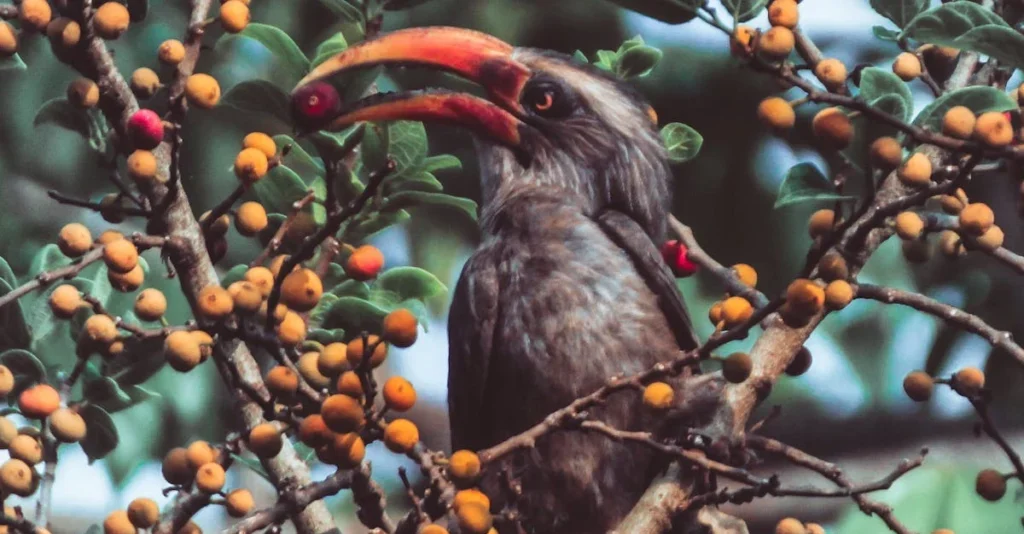
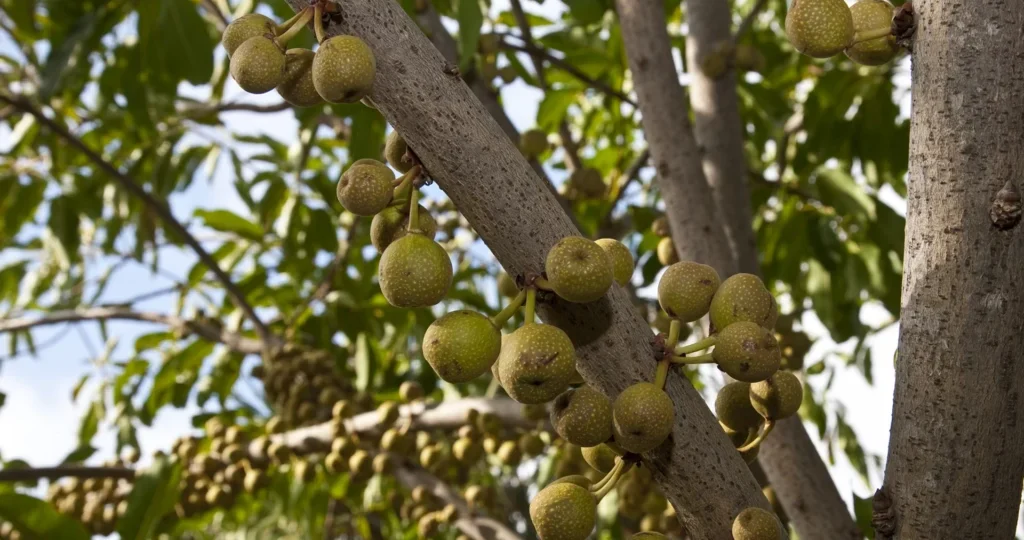
Indian grey Hornbill Feeding on it's favourite fruit

Ficus (Fig) Family — The Favourite Feast

Among all fruiting trees, the Ficus (Fig) family forms the core of the hornbill’s diet.

These trees produce fruits with large, fleshy seeds. Most birds cannot swallow them — but the Indian Grey Hornbill can. After feeding, the bird carries these seeds across wide forest areas and disperses them naturally.

Common fig trees fed upon include:

  • Banyan Tree

  • Peepal Tree

  • Cluster Fig

  • Wild Fig species

This perfect partnership between hornbill and fig trees keeps forest ecosystems thriving year after year — including the native green patches around ChukkiMane’s natural surroundings.

Ficus Fig tree

45 Fruit Trees That Sustain the Indian Grey Hornbill

Ficus & Wild Forest Fruits

Banyan, Peepal, Cluster Fig, and other wild fig species form the essential food source of Indian Grey Hornbills in forest habitats.

Scrub & Native Forest Fruits

Karonda, Ber, Mahua, Tamarind, Neem, and Bakula nourish hornbills across scrublands and rural woodlands.

Urban & Garden Fruits

Jamun, Guava, Mango, Papaya, Sapota, and Litchi attract hornbills into villages and home gardens.

Seasonal & Flexible Diet

Seasonal forest figs, wild berries, orchard leftovers, and garden fruits keep hornbills thriving year-round.

Not Just Fruits — A Balanced Diet

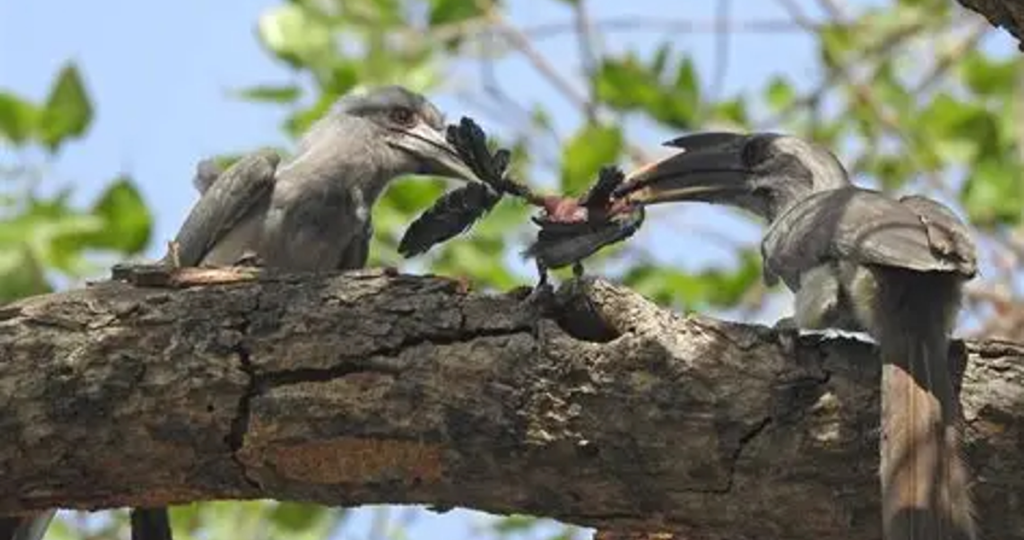
While fruits dominate their meals, Indian Grey Hornbills also consume:

  • Insects and beetles

  • Caterpillars

  • Small lizards

  • Molluscs

“This protein-rich food becomes especially important during breeding season when adults feed chicks inside tree-hollow nests”
Pest-Control-HornBill

Why Guests at ChukkiMane Often Spot Hornbills

  • Presence of native fruiting trees

  • Proximity to riverine forest patches

  • Calm, low-disturbance surroundings

  • Seasonal fig fruiting cycles

For birdwatchers and nature lovers, seeing a hornbill feeding in the canopy is a truly special moment — a glimpse into nature’s ongoing renewal.

Guests at Chukkimane spot Hornbill

A Silent Forest Guardian

Every flight of a hornbill after feeding carries seeds across the landscape.
Over time, this simple act: Expands forest cover Increases plant diversity Strengthens natural ecosystems Supports wildlife chains Around the Kaveri river basin near ChukkiMane, these natural seed-spreading cycles quietly maintain healthy forest balance — benefiting birds, animals, and future generations.
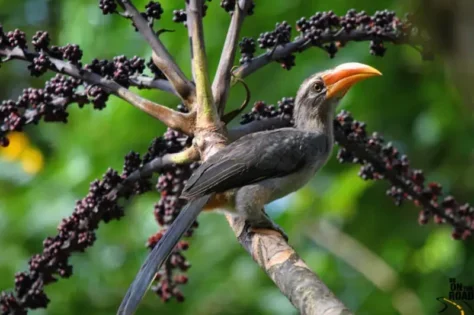
Black fruit Indian grey Hornbill

At ChukkiMane, these winged gardeners remind us that nature renews itself quietly, one seed at a time.

With every fig swallowed and every seed carried across the canopy, the Indian Grey Hornbill earns its name — the true Farmer of the Forest.

A Natural Feast for the Indian Grey Hornbill

From towering fig trees to garden fruits and seasonal berries, ChukkiMane’s green cover provides a thriving food habitat for the Indian Grey Hornbill — a key seed disperser of our forests.

FAQs — Indian Grey Hornbill Diet

Why are hornbills called Farmers of the Forest?
Because they swallow large seeds and disperse them over long distances, helping forests regenerate naturally.

Do hornbills eat only fruits?
Mostly fruits, but they also eat insects and small reptiles for protein.

Why do they prefer fig trees?
Fig fruits are abundant, nutritious, and contain large seeds that hornbills can swallow.

Can they swallow large seeds?
Yes — their bill and throat structure allow them to swallow seeds other birds cannot.

Are they seen near ChukkiMane?
Yes — the surrounding green landscape and fig trees attract hornbills seasonally.

Do they visit gardens too?
Yes — they adapt well and feed on garden fruits when available.