


Spot the Elegant Asian Paradise Flycatcher on Birdwatching Trips Near Bangalore
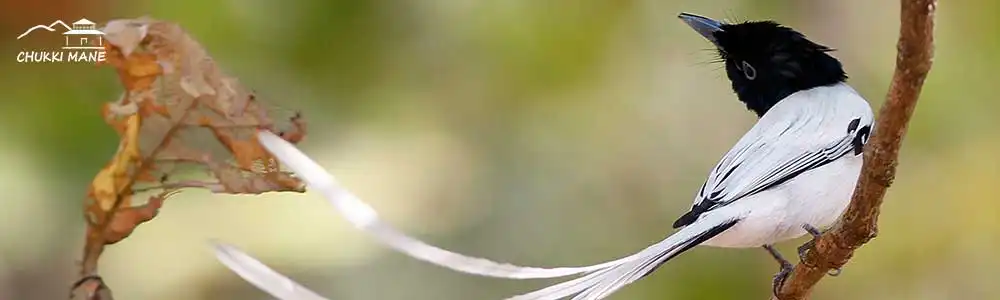
The Asian Paradise Flycatcher breeds from Turkestan to Manchuria and migrates to tropical Asia, including India, making it a must-see for birdwatching near Bangalore. At ChukkiMane Resort, spot this beauty in our lush habitats—perfect for senior citizen birdwatching Bangalore. The adult male boasts a striking black crested head, chestnut upperparts, pale grey underparts, and long tail streamers that double its 20 cm body length. Females resemble chestnut males but have a grey throat, smaller crest, and no tail streamers.
This noisy bird calls with a sharp zweet and perches upright like a shrike on short legs. Insectivorous, it hunts by flycatching in dense canopies—ideal for quiet observation at our eco resorts for elderly Bangalore.
Shape & Size of Asian Paradise Flycatcher
The Asian Paradise Flycatcher measures 7.5-8.7 inches (19-22 cm) body length, excluding the tail up to 9.4 inches (24 cm) and male streamers reaching 12 inches (30 cm). Wings span 3.4-3.6 inches (86-92 mm). Their short legs and upright perch mimic shrikes, making them easy to spot during flycatcher bird facts sessions at ChukkiMane, a top nature resort Bangalore for relaxed viewing.
Ideal Habitats for Asian Paradise Flycatcher in India
Paradise flycatchers thrive in rainforests, montane forests, woodlands, savanna, mangroves, riparian zones, deciduous forests, and bamboo groves—even gardens. Our ChukkiMane birdwatching trails mimic these, offering accessible paths for seniors in Karnataka’s serene countryside.
Food Habits: Insect Hunting by Asian Paradise Flycatcher
Asian Paradise Flycatchers primarily eat insects caught mid-air, foraging in tree understories. Watch them in action at ChukkiMane’s organic farms, where migratory birds India flock—combining birdwatching with our pure vegetarian meals.
Nesting Secrets of Asian Paradise Flycatcher
Breeding May-July, these monogamous birds share nest-building, incubation (21-23 days for 3-4 eggs), and chick-rearing. Cup nests of twigs and spider webs hang from low branches, often near drongo nests for protection. Spot potential sites on gentle walks at our best resorts for birdwatching Karnataka.
Why Visit ChukkiMane for Unforgettable Birdwatching?
Experience the Asian Paradise Flycatcher up close at ChukkiMane Resort near Bangalore—India’s premier senior-friendly eco resort with flat trails, pure veg farm-fresh lunches (ragi balls, curries, rasam on banana leaves), and peaceful vibes. Perfect for old age parents, families, or solo nature lovers. Book your birdwatching package now for organic serenity, just 120 kms from Bengaluru—your gateway to migratory birds India awaits!